Introduction
In 2016, a Chinese animated fantasy film quietly released to minimal fanfare, earned a modest $9.3 million at the box office, and disappeared from most Western audiences’ radar completely. That film was Dragon Nest: Throne of Elves, and it might be the most underestimated video game adaptation you’ve ever watched.
Most reviews dismissed it as another forgettable MMORPG cash-grab. They focused on surface-level plot points, mentioned the game connection in passing, and moved on. What they missed was a production that cost $15 million, employed cutting-edge animation techniques for Chinese studios at the time, and actually bothered to tell a coherent fantasy story with genuine character development.
This breakdown reveals the production secrets, lore connections, animation achievements, and narrative depth that virtually every review overlooked. Whether you’re a Dragon Nest veteran or simply curious about quality Chinese animation, you’re about to discover why this film deserves a complete re-evaluation.
What Dragon Nest Throne of Elves Is Really About
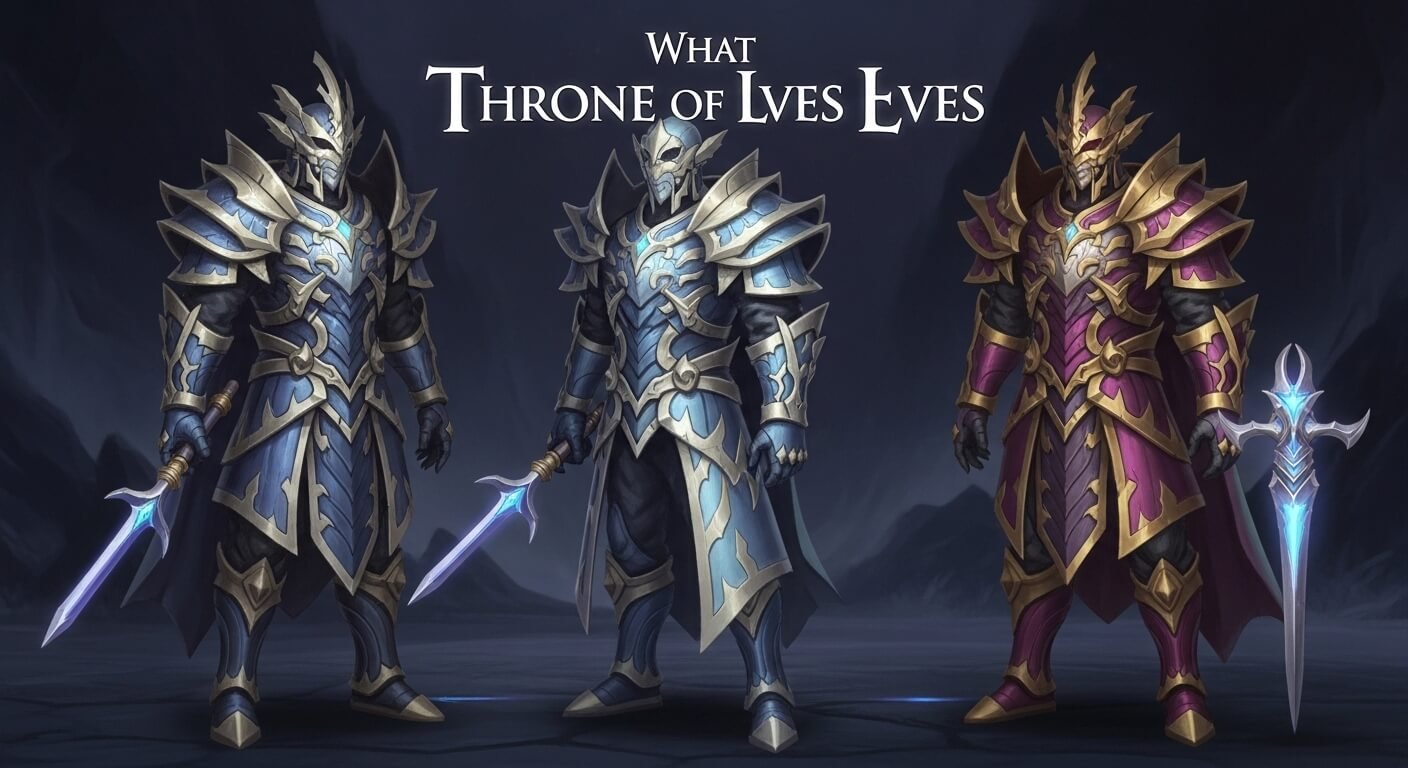
Dragon Nest Throne of Elves follows half-elf warrior Lambert and princess Liya as they unite humans and elves against an ancient dark force, exploring themes of prejudice, identity, and sacrifice within a high-fantasy world based on the Dragon Nest MMORPG universe.
The film opens in Altera, a kingdom where humans and elves maintain an uneasy peace decades after devastating wars. Lambert, a half-elf knight struggling with dual heritage rejection, serves as royal guard to Princess Liya.
When the Black Dragon awakens and an ancient evil manipulates both races toward renewed conflict, Lambert and Liya must unite fractured alliances before darkness consumes everything.
The Core Plot Beyond Surface Summaries
What separates Dragon Nest Throne of Elves from generic fantasy is its refusal to make the central conflict purely good-versus-evil.
The film’s antagonist, Argenta, is a corrupted elf driven by genuine grief over her sister’s death in the human-elf wars. Her motivation—revenge born from loss—creates moral complexity that most video game adaptations skip entirely.
The story structure follows a traditional hero’s journey, but executes it with surprising restraint. There are no unnecessary subplots or romantic triangles added for padding.
The 90-minute runtime stays focused on Lambert’s internal conflict (accepting both sides of his heritage) and the external threat (preventing war and defeating Argenta). Every major scene advances one or both of these narrative threads.
Why the Story Works Despite Familiar Fantasy Tropes
Dragon Nest Throne of Elves uses established fantasy conventions—the chosen warrior, ancient prophecy, racial tensions—but treats them as a framework rather than a crutch. The film earns its emotional beats through character consistency rather than manipulation.
When Lambert finally accepts his half-elf identity in the third act, it lands because the script spent the entire runtime showing how both humans and elves rejected him. When Liya chooses duty over safety, it reflects her established character values rather than sudden plot-required bravery.
These aren’t groundbreaking narrative innovations, but they’re executed with more care than most adaptations bother attempting.
The dialogue occasionally stumbles into exposition-heavy territory, particularly in the first 20 minutes when establishing world politics. However, once the core conflict engages, conversations feel purposeful rather than purely informational.
The Production Story Nobody Talks About
Mili Pictures produced Dragon Nest Throne of Elves with a $15 million budget—substantial for Chinese animation in 2016—but inadequate international marketing and poor timing led to a disappointing $9.3 million box office return despite solid domestic reception.
Mili Pictures and the $15 Million Budget Reality
Mili Pictures, founded in 2010, specialized in CG animation and had previously worked on commercials and smaller projects before tackling Dragon Nest Throne of Elves as their first major theatrical feature. The studio partnered with Shengqu Games (formerly Shanda Games), the Chinese publisher of Dragon Nest, creating a direct pipeline between game developers and filmmakers.
The $15 million budget positioned this as a mid-tier Chinese animated production—significantly higher than low-budget direct-to-video releases but nowhere near Pixar’s $175+ million standards. For context, Big Fish & Begonia, a critically acclaimed Chinese animated film from the same year, operated on a similar budget scale.
This budget level meant the studio could afford quality voice talent, extensive rendering time for complex magical effects, and detailed character modeling. It also meant they couldn’t afford the extended development cycles or unlimited revisions that Western studios use to polish every frame.
The production timeline ran approximately 18 months from pre-production to theatrical release—aggressive by Western standards but typical for Chinese animation studios competing in a crowded market.
Why International Distribution Failed This Film
Dragon Nest Throne of Elves received a limited international theatrical release, with most overseas viewers accessing it through streaming platforms months or years after the Chinese premiere. Several factors contributed to this distribution failure.
Timing collision: The film was released in summer 2016, competing against Finding Dory, The Secret Life of Pets, and other major Western animated releases that dominated international theater chains. Chinese animated films historically struggle to secure international screen space against established Western franchises.
Marketing invisibility: Shengqu Games primarily marketed to existing Dragon Nest players in China and Southeast Asia, where the MMORPG maintained strong player bases. Western markets received minimal promotional investment, relying on word-of-mouth within gaming communities rather than traditional film marketing campaigns.
Subtitle quality issues: Early international streaming versions suffered from awkward English-language subtitle translations, making the dialogue sound stilted. Viewers unfamiliar with Chinese animation conventions also struggled with pacing differences and narrative structures that don’t match Western three-act formulas precisely.
The film performed respectably in China and earned a positive reception in Southeast Asian markets where Dragon Nest remained popular, but these regional successes never translated to broader awareness. No major Western distributor picked up theatrical rights, relegating the film to digital platforms where it exists alongside thousands of other titles competing for attention.
How Dragon Nest Throne of Elves Connects to the Game
ATOMIC ANSWER: Dragon Nest Throne of Elves adapts characters and world-building from the Dragon Nest MMORPG but tells an original story set during the game’s timeline, maintaining lore consistency while remaining accessible to viewers who never played the game.
Character Origins and Lore Accuracy
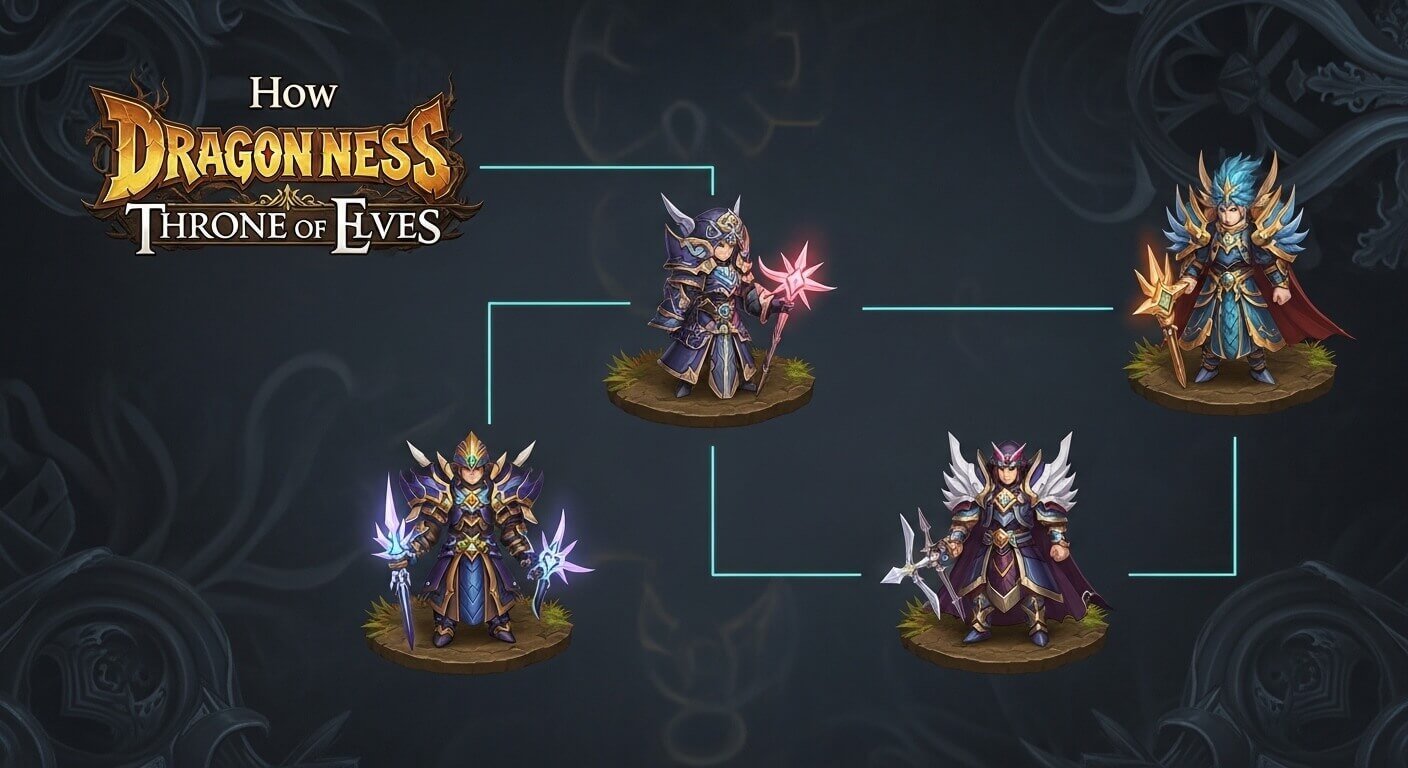
The film draws primary characters directly from Dragon Nest’s class system and NPC roster. Lambert represents the Warrior class archetype, while Liya channels elements of the Cleric class. Argenta, the antagonist, connects to the game’s Sorceress class and broader elf faction lore.
Game veterans immediately recognize location names like Carderock Pass and Saint Haven, which appear as actual playable areas in the MMORPG. The Black Dragon references the game’s dragon-centric mythology, where ancient dragons serve as both guardians and catastrophic threats depending on their corruption status.
The film respects established lore regarding the ancient human-elf wars that form the backdrop context throughout the game’s quest lines. While the specific plot events are original to the movie, the racial tensions and historical conflicts align with information players discover through in-game dialogue and quest text. This approach allows the film to feel authentic to existing fans while not requiring encyclopedic game knowledge to follow.
Timeline Placement in Dragon Nest Universe
Dragon Nest Throne of Elves occupies an interesting chronological space—it’s neither a direct prequel nor a sequel to main game events, but rather a parallel story occurring during the broader timeline when ancient threats periodically resurface to threaten Altera.
The game’s episodic expansion structure means multiple major conflicts happen across different time periods. The film slots into this framework as one such conflict that players don’t personally experience but exists within the same world logic. Think of it as a significant event happening in another region while game players handle their own storylines elsewhere.
This narrative positioning was strategic. It allowed the filmmakers freedom to create original characters and plot without contradicting established player experiences, while still leveraging the game’s world-building investment.
What Game Players Notice Immediately
Dragon Nest veterans catch references that casual viewers completely miss. The combat choreography directly mirrors in-game skill animations—Lambert’s sword techniques and Liya’s supportive magic reflect actual player abilities from their respective classes.
Background creatures and enemy designs pull from the game’s monster encyclopedia. The magical effects, particularly light and dark magic visualizations, match the game’s aesthetic precisely. Even architectural details in elven and human settlements reflect location design from different game zones.
The film also incorporates the game’s distinctive approach to mixing serious fantasy themes with occasional lighter moments. Dragon Nest, as an MMORPG, balances dramatic storytelling with humor and character banter. The movie maintains this tonal mixture, preventing the dark themes from overwhelming the adventure spirit that defines the game’s identity.
Players familiar with Dragon Nest’s endgame raid content particularly appreciate how the final confrontation with corrupted forces mirrors the structure and spectacle of major boss battles—multiple phases, environmental hazards, and coordinated team efforts to overcome overwhelming power.
The Animation Quality Deserves a Second Look
ATOMIC ANSWER: Dragon Nest Throne of Elves achieves impressive character modeling and magical effects that competed with mid-tier Western CG animation in 2016, though environmental rendering and lip-sync limitations reveal budget constraints that don’t diminish the overall visual achievement.
Technical Achievements for the 2016 Chinese Animation
Chinese animation studios in 2016 operated years behind Western counterparts in rendering technology and pipeline efficiency, making Dragon Nest Throne of Elves’ technical accomplishments more impressive in the proper context. The film runs at a consistent 24 fps with smooth motion during both dialogue scenes and complex action sequences—a baseline standard that many low-budget CG films struggle to maintain.
Character models feature detailed texturing that holds up in close-up shots. Fabric simulations on Liya’s royal garments and Lambert’s armor show realistic weight and movement physics.
Hair rendering, particularly on elven characters with long, flowing styles, demonstrates sophisticated strand dynamics that avoid the plastic-looking hair that plagued earlier CG attempts.
The magical effect works as the film’s visual highlight. Combat sequences feature layered particle effects for elemental magic, energy shields, and corruption manifestations. The Black Dragon’s dark energy tendrils use volumetric rendering techniques that create genuine depth and menace.
These effects sequences required significant rendering time and technical expertise that positioned Mili Pictures among the more capable Chinese animation studios of the period.
Lighting design throughout the film shows an understanding of cinematic composition. The contrasts between warm human kingdom scenes and cool-toned elven forest settings use color temperature to establish mood and cultural differences. Night sequences maintain visibility while preserving atmosphere—a balance that many CG films struggle to achieve without scenes becoming murky.
Where It Falls Short (And Why That’s Okay)
Budget limitations surface in environmental background detail. Wide establishing shots of forests and kingdoms feature less geometric complexity than foreground character and action scenes. Background textures occasionally repeat in noticeable patterns. Crowd scenes use obvious model duplication with minimal variation.
Lip-sync animation follows Chinese dialogue precisely but creates mismatches in English-dubbed versions, leaving international viewers with the choice between subtitle reading or distracting mouth-movement discrepancies. The film was clearly animated for Chinese voice acting, with English versions treated as secondary market afterthoughts.
Some action sequences rely on motion blur and quick cuts to hide animation complexity limitations. While this maintains visual excitement, it occasionally obscures spatial geography during fights. Western audiences accustomed to clear action staging may find certain sequences harder to follow than necessary.
These shortcomings don’t diminish the achievement—they contextualize it. Dragon Nest Throne of Elves represents what a motivated mid-budget studio could accomplish with 2016 technology and 18-month production constraints. Comparing it to Pixar’s simultaneous output misses the point. Compared to Chinese animation industry standards of the period and similar-budget international productions, it demonstrates genuine technical competence and artistic ambition.
Character Depth That Casual Viewers Miss
Lambert and Liya undergo genuine character development arcs that surface through subtle dialogue and action choices rather than explicit exposition, rewarding attentive viewers with richer emotional experiences than superficial viewing reveals.
Lambert’s Actual Character Arc
Surface readings position Lambert as a generic “chosen hero” who learns to accept his destiny. Closer examination reveals a more complex journey of belonging and identity reconciliation.
Lambert opens the film already competent as a warrior—his conflict isn’t about gaining power or skill. His struggle centers on fundamental identity rejection from both sides of his heritage. Humans distrust him for elven blood; elves dismiss him for human contamination. This dual rejection creates someone who excels at his duty specifically because he uses competence to prove worth that neither culture grants him by default.
The film shows this through interaction patterns. Watch how Lambert maintains professional distance in early scenes, avoiding casual conversation even with allies. His stiffness isn’t poor characterization—it’s defensive behavior from someone who learned that getting close to either group leads to eventual rejection when his mixed heritage surfaces.
His character turn happens when he stops trying to prove himself to either side and instead accepts that being both human and elf creates a unique perspective rather than double inadequacy. This realization doesn’t come through a single revelation speech but through accumulated experiences showing that his dual nature provides insights neither purely human nor purely elven characters possess.
The final battle sequence visualizes this arc completion when Lambert combines human combat techniques with elven magical sensitivity, creating a fighting style that neither culture alone could achieve. His power comes from integration, not choosing one heritage over the other.
Liya Beyond the “Strong Female Lead” Trope
Liya could easily have become another generic capable princess who fights instead of waiting for rescue. The script makes her more interesting by giving her conflicting responsibilities that force genuine difficult choices.
As a princess, Liya carries political obligations that sometimes conflict with moral clarity. She can’t simply charge into battle against injustice because her actions carry diplomatic consequences affecting thousands. Early scenes establish her chafing against these constraints, wanting to act decisively but recognizing that her position requires calculated consideration.
Her relationship with Lambert functions less as a romantic subplot and more as mutual respect between two people trying to bridge cultural divides through different methods. Lambert does it through individual excellence; Liya does it through institutional change and political alliance-building. The film treats both approaches as necessary rather than positioning one as superior.
The script allows Liya moments of doubt and strategic uncertainty without undermining her competence. She makes a tactical error in the mid-film that leads to a temporary setback—a choice that shows she’s learning rather than omniscient. Her growth comes from recognizing when to lead decisively versus when to trust others’ expertise, particularly in areas where her royal education left gaps.
By the conclusion, Liya has evolved from a princess trying to prove individual capability into a leader who understands that building bridges between cultures requires vulnerability and trust, not just strength and determination.
Why Dragon Nest Throne of Elves Actually Flopped
Dragon Nest Throne of Elves underperformed financially due to minimal international marketing investment, unfortunate timing against major Western animated releases, and distribution strategies that prioritized existing game players over broader fantasy film audiences.
Marketing Failures
Shengqu Games’ marketing approach treated the film primarily as promotional content for the Dragon Nest MMORPG rather than a standalone theatrical product. Promotional materials heavily featured game logos and terminology that meant nothing to potential viewers unfamiliar with the MMORPG.
Trailers focused on action sequences and magical spectacle without establishing characters or emotional stakes. This attracted existing game fans already invested in the IP, but failed to communicate why non-players should care. The marketing essentially preached to the converted while ignoring the broader potential audience.
International marketing received minimal budget allocation. Western markets saw sporadic online ads targeted at gaming communities but no traditional film marketing campaigns. No press junkets, no critic screenings, no partnerships with animation festivals that could have generated industry buzz.
The poster and key art design followed Chinese aesthetic preferences that don’t translate directly to Western visual hierarchies. International viewers scrolling past needed clearer genre signaling and character focal points to distinguish this film from hundreds of other fantasy animations competing for attention.
The Timing Problem
Summer 2016 was particularly brutal for non-Western animated releases. Finding Dory dominated global box offices with $1.02 billion, The Secret Life of Pets earned $875 million, and Zootopia’s spring release continued pulling family audiences into late summer.
Chinese animated films face structural disadvantages in international markets. Theater chains allocate limited screen space to animation, prioritizing established Western franchises with proven track records. A mid-budget Chinese production based on an MMORPG with a minimal Western player base couldn’t compete for screens against Disney and Illumination juggernauts.
The film needed either an earlier release to avoid this competition cluster or a delayed timing to find a clearer window. Instead, it launched directly into the worst possible competitive environment, ensuring theatrical failure outside China regardless of quality.
Streaming release timing also hurts long-term discovery. The film hit various international platforms months apart with inconsistent availability by region. Potential word-of-mouth momentum couldn’t build when viewers in different countries couldn’t access the film simultaneously to create conversation critical mass.
Is Dragon Nest Throne of Elves Worth Watching in 2026?
Dragon Nest Throne of Elves deserves your 90 minutes if you appreciate competent fantasy storytelling with genuine animation craft, particularly if you’re curious about Chinese animation development or have any Dragon Nest gaming history.
The film won’t revolutionize your understanding of fantasy narratives or showcase Pixar-level animation wizardry. What it offers is solid execution of familiar fantasy elements with more character depth than expected, impressive visual achievements for its production context, and a complete story that respects viewers’ intelligence.
Watch it if you enjoy discovering overlooked films that deserved better reception. Watch it if you’re interested in animation production outside Western studios. Watch it if you want a self-contained fantasy adventure that doesn’t require sequel investment or extensive franchise knowledge.
Skip it if you need cutting-edge animation technology, can’t tolerate subtitle reading, or require completely original fantasy world-building that breaks all genre conventions. This film works within established fantasy frameworks rather than subverting them, and your tolerance for familiar tropes will determine enjoyment.
The 2024 viewing experience benefits from lowered expectations—approaching this as a forgotten gem rather than a major release lets you appreciate its achievements without disappointment over its limitations.
Where to Watch Dragon Nest Throne of Elves
Availability varies significantly by region and changes frequently. As of 2024, Dragon Nest Throne of Elves appears on various streaming platforms with inconsistent access by country.
Check these platforms for current availability:
- Amazon Prime Video (availability varies by region)
- YouTube Movies (rental/purchase options)
- Asian streaming services like iQIYI or Viki (with VPN access if outside supported regions)
- Specialized anime/animation platforms
Viewing recommendations: Choose subtitle versions over English dub when possible. The original Chinese voice acting with quality English subtitles preserves intended performance nuances that the dub version loses. If you must watch the dub, accept that lip-sync mismatches are technical limitations rather than quality indicators.
Physical media collectors may find limited edition releases through import retailers specializing in Asian media, though these typically include Chinese subtitles only.
FAQs
What is Dragon Nest Throne of Elves about?
Dragon Nest Throne of Elves is a 2016 Chinese animated fantasy film following half-elf warrior Lambert and Princess Liya as they work to prevent renewed war between humans and elves while fighting an ancient dark force. The film explores themes of identity, prejudice, and unity within a high-fantasy setting based on the Dragon Nest MMORPG universe.
Is Dragon Nest Throne of Elves related to the game?
Yes, Dragon Nest Throne of Elves adapts characters, locations, and lore from the Dragon Nest MMORPG but tells an original story. The film uses the game’s world-building and mythology as foundation while remaining accessible to viewers who never played the game. Game players will recognize character classes, locations, and lore references throughout.
How many Dragon Nest movies are there?
Two Dragon Nest animated films exist: Dragon Nest: Warriors’ Dawn (2014) and Dragon Nest: Throne of Elves (2016). Both are produced by Mili Pictures and set in the Dragon Nest universe, though they tell separate stories with different characters. Throne of Elves is the second film but not a direct sequel.
Who are the main characters in Throne of Elves?
The main characters are Lambert (a half-elf warrior struggling with dual heritage), Princess Liya (human royal working to maintain peace between races), and Argenta (an elf antagonist driven by grief over her sister’s death). Supporting characters include various human knights and elven leaders who represent political factions on both sides of the cultural divide.
Is there a Dragon Nest Throne of Elves sequel?
No official sequel to Dragon Nest Throne of Elves has been announced or produced as of 2024. The film tells a complete story without sequel setup. While the Dragon Nest universe could support additional films, Mili Pictures has not confirmed any plans for a third Dragon Nest animated feature.
Is Dragon Nest Throne of Elves good?
Dragon Nest Throne of Elves is a competently executed mid-budget fantasy animation with solid character development and impressive magical effects for its production context. It’s better than most video game adaptations and deserves recognition as quality Chinese animation from 2016, though it won’t match Pixar-level technical achievements. Worth watching for fantasy fans and animation enthusiasts.
Is Dragon Nest Throne of Elves on Netflix?
Dragon Nest Throne of Elves availability on Netflix varies by region and changes over time. As of 2024, the film is not consistently available on Netflix in most Western markets. Check Amazon Prime Video, YouTube Movies, and specialized Asian streaming platforms for current viewing options. Availability shifts frequently as licensing agreements change.