Introduction
Monster anime has evolved far beyond simple “heroes fight creatures” formulas. In the past decade, series like Attack on Titan shifted the entire genre by making monsters existential threats that force characters into impossible moral choices.
The result? A wave of anime that uses monster battles as vehicles for exploring humanity’s capacity for violence, survival ethics, and the thin line separating hero from monster.
Most “best monster anime” lists regurgitate the same five mainstream titles without explaining why their battles work or what kind of darkness they deliver.
You’ve probably seen Attack on Titan recommended a dozen times without understanding whether it matches your tolerance for psychological horror versus gore, or whether you prefer strategic warfare over raw power clashes.
This guide categorizes monster anime by the relationship between humans and monsters—and the philosophy driving their battles. You’ll discover which series deliver the specific type of intensity you’re craving, complete with 2024 streaming information and content warnings so you can make informed decisions.
What Separates Great Monster Anime from Generic Action Shows
Great monster anime treats monsters as narrative devices that reveal character psychology and societal structure, not just obstacles to defeat. The battles matter because they force protagonists to sacrifice their humanity, question their purpose, or recognize their own monstrosity—making each fight a philosophical confrontation, not just spectacle.
The Battle Philosophy Framework
Monster battles in anime typically follow three philosophies:
Strategic warfare relies on intelligence, coordination, and resource management. Attack on Titan exemplifies this—soldiers use omni-directional mobility gear to exploit Titan’s weak points because brute force fails. These battles create tension through planning, failure, and adaptation.
Raw power clashes emphasize overwhelming force, transformation sequences, and escalating destruction. Devilman Crybaby fits here—when Akira transforms, battles become visceral displays of demonic power where strategy takes a backseat to emotional intensity.
Psychological combat makes the monster threat secondary to mental deterioration. Monster (the Johan series) demonstrates this perfectly—the “monster” is human, and battles occur in manipulation, moral corruption, and identity destruction rather than physical confrontation.
Understanding “Dark” in Anime Context
“Dark” varies wildly across monster anime, causing mismatched expectations.
Gore-dark shows like Hellsing Ultimate feature graphic violence, dismemberment, and body horror. Psychologically dark series like Shin Sekai Yori disturb through ethical implications and slow-burning dread rather than blood. Tonally dark anime such as Dorohedoro balance brutal violence with dark comedy, creating discomfort through tonal whiplash.
Knowing which darkness you’re signing up for prevents wasted time. Devilman Crybaby delivers both extreme gore and psychological devastation. Kabaneri of the Iron Fortress leans heavily on action spectacle with moderate violence. Monster contains minimal on-screen gore but maximum psychological horror.
Great monster anime uses creatures as tools to explore moral ambiguity, survival ethics, and humanity’s capacity for violence—distinguishing itself through battle philosophy (strategic/power-based/psychological) and specific types of darkness (gore/psychological/tonal) rather than generic action.
Monster Anime Where Humanity Fights for Survival
These series position monsters as existential threats to human civilization, forcing characters into defensive wars where victory means species survival.
Attack on Titan
Episodes: 87 (Complete) | Rating: 9.0/10| Streaming: Crunchyroll, Hulu
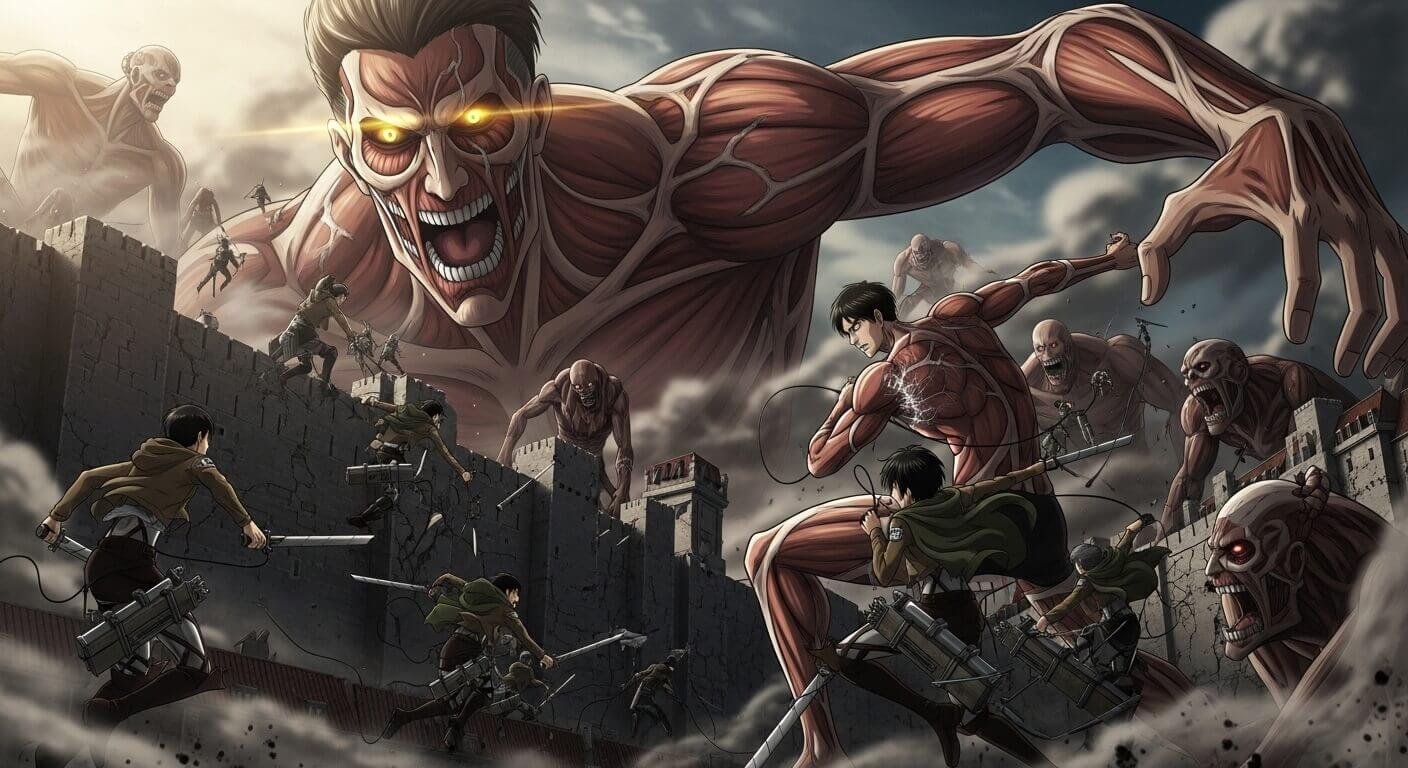
Humanity lives behind massive walls protecting them from Titans—giant humanoid creatures that devour humans without reason. When a Colossal Titan breaches the outer wall, soldier Eren Yeager joins the military to exterminate every Titan in existence.
Why the battles are insane: Attack on Titan revolutionized anime combat through three-dimensional maneuvering gear that turns every fight into high-speed aerial warfare. Soldiers zip through urban environments, slicing Titan napes in split-second windows while managing gas and blade durability. Early battles emphasize squad coordination and sacrifice—single mistakes cause gruesome deaths, maintaining constant stakes.
The series evolves from “humanity vs. monsters” into complex warfare between human factions, with Titans becoming weapons rather than simple enemies. Season 4 delivers some of anime’s most devastating battle episodes, where the moral lines blur completely, and former heroes commit atrocities in the name of survival.
The darkness: Graphic deaths (soldiers eaten alive, crushed, or bisected), genocide, war crimes, child soldiers, and ethical nihilism. The final season confronts fascism, ethnic cleansing, and whether any side in war remains innocent. Psychologically exhausting by design.
Content warning: Extreme violence, body horror, depictions of genocide
Attack on Titan combines strategic aerial combat using 3D maneuvering gear with escalating moral complexity—starting as humanity’s survival battle against mindless Titans, then evolving into warfare between human factions where monsters become weapons and heroes become perpetrators of atrocities.
Kabaneri of the Iron Fortress
Episodes: 12 + 1 movie | Rating: 7.2/10 | Streaming: Netflix, Crunchyroll
During an industrial revolution, a zombie-like virus creates Kabane—corpses with steel-coated hearts that devour humans. Survivors travel between fortified stations on armored trains. When Ikoma, a young engineer, is bitten but retains his humanity, he becomes a Kabaneri—half-human, half-Kabane—and joins the fight to reach a rumored safe zone.
Why the battles are insane: Kabaneri delivers kinetic, high-octane action where characters fight on moving trains against swarms of Kabane. The steampunk setting creates unique combat scenarios—survivors use steam-powered weapons, nail guns, and experimental technology against enemies that only die from heart destruction.
The animation quality from Wit Studio (same as early Attack on Titan) produces fluid, gorgeously choreographed battles with exceptional attention to detail. Ikoma’s Kabaneri powers allow berserker-style sequences where he tears through enemies with superhuman strength, creating a satisfying power fantasy within desperate survival scenarios.
The darkness: Moderate gore (biting, blood spray), class warfare, human sacrifice, survival ethics. The show explores how crises expose societal hierarchies and whether infected individuals retain human rights. Lighter than Attack on Titan but still unflinching about human cruelty during collapse.
Content warning: Violence, blood, themes of infection/loss of humanity
Kabaneri of the Iron Fortress offers fast-paced steampunk action on armored trains against zombie-like Kabane, featuring a half-human protagonist with superhuman abilities, stunning animation from Wit Studio, and themes of class warfare during apocalyptic survival—lighter tonally than Attack on Titan but visually spectacular.
God Eater
Episodes: 13 | Rating: 7.0/10 | Streaming: Crunchyroll, Funimation
Earth is consumed by Aragami—monstrous creatures that devour everything. Humanity’s last hope lies with God Eaters—soldiers wielding God Arcs, bio-weapons created from Aragami cells that can kill the creatures. New God Eater Lenka Utsugi joins an elite squad defending one of the last human settlements.
Why the battles are insane: God Arcs transform between massive swords, guns, and shields, creating weapon-morphing combat that shifts fluidly between ranged and melee. Aragami vary wildly in design—from wolf-like speedsters to colossal eldritch abominations—requiring tactical adaptation per encounter.
The animation uses a distinctive pencil-sketch aesthetic that makes battles feel raw and visceral. God Eaters risk cellular corruption each time they fight, adding biological stakes beyond physical danger. Team coordination is essential—characters cover each other’s transformations, exploit Aragami weaknesses together, and make calculated sacrifices.
The darkness: Body horror (cellular corruption), expendable soldiers, corporate exploitation, survival desperation. The show examines how military organizations treat soldiers as consumable resources during existential wars. Moderately dark with focus on systemic cruelty over individual atrocities.
Content warning: Violence, body horror, themes of exploitation
God Eater features weapon-morphing combat against diverse Aragami monsters, a unique pencil-sketch animation style, and biological stakes where fighters risk cellular corruption—exploring how military systems treat soldiers as expendable resources during humanity’s desperate last stand.
When the Monster Becomes the Protagonist
These anime invert traditional dynamics by making the “monster” the central character, exploring what it means to retain humanity while possessing inhuman power.
Parasyte: The Maxim
Episodes: 24 (Complete) | Rating: 8.3/10 | Streaming: Crunchyroll, Netflix, Hulu
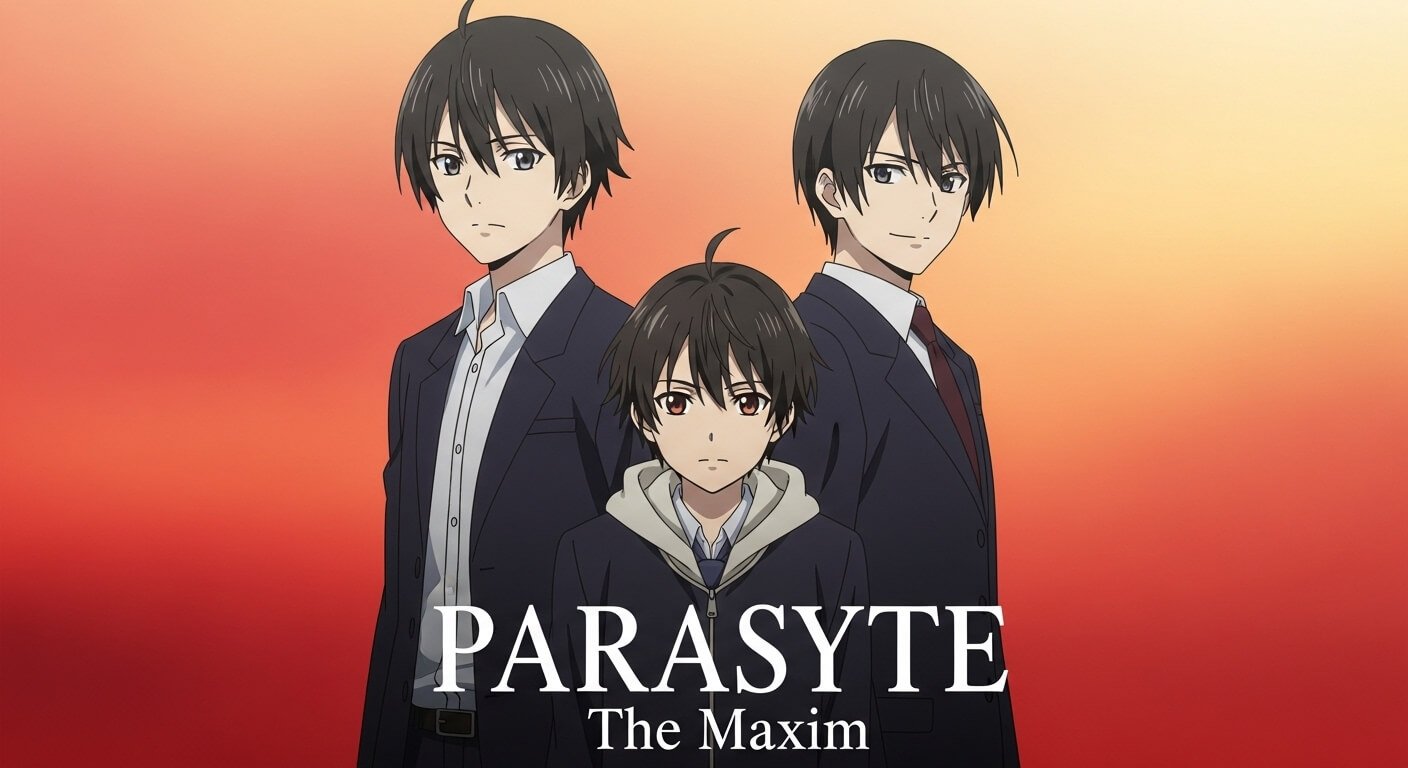
Alien parasites invade Earth, burrowing into human brains and taking control of bodies. High schooler Shinichi Izumi is infected, but the parasite—later named Migi—only takes his right hand, leaving his brain intact. Forced into symbiosis, they must survive other parasites hunting humans while Shinichi struggles to maintain his humanity.
Why the battles are insane: Migi can morph Shinichi’s right arm into blades, shields, or grotesque sensory organs within milliseconds. Battles become strategic duels where parasites read attack patterns, adapt mid-fight, and exploit human physiology knowledge. The animation brilliantly conveys alien combat logic—parasites don’t fight like humans; they fight like predators optimizing for efficiency.
Later fights introduce parasites that control multiple bodies or merge into composite creatures, escalating both visual spectacle and tactical complexity. Shinichi’s growing physical abilities and Migi’s analytical intelligence create a unique partnership dynamic where victory requires synchronized decision-making.
The darkness: Parasites decapitate humans and wear their bodies like suits. Graphic violence includes slicing, impalement, and body horror transformations. Psychologically, Shinichi slowly loses emotional responses, questioning whether he’s still human. The show explores predator-prey ethics and whether humanity’s dominance justifies existence.
Content warning: Extreme violence, body horror, existential themes
Parasyte features a symbiotic alien living in the protagonist’s right arm, creating strategic combat where limb-morphing abilities and analytical partnership enable survival against other parasites—while exploring whether retaining human emotions matters when you’re becoming biologically inhuman.
Devilman Crybaby
Episodes: 10 (Complete) | Rating: 7.8/10 | Streaming: Netflix
Demons have returned to reclaim Earth. When sensitive teenager Akira Fudo merges with the demon Amon, he becomes Devilman—possessing demonic power while retaining his human heart. As demon attacks escalate and paranoia spreads, Akira fights to protect humanity from both demon threats and its own destructive nature.
Why the battles are insane: Devilman Crybaby delivers some of the most visceral, unrestrained combat in anime. Transformations are nightmarish body-horror spectacles. Demon battles erupt without warning—in clubs, streets, homes—with extreme violence rendered in fluid, psychedelic animation by Science SARU.
Director Masaaki Yuasa’s distinctive style makes every fight feel chaotic and primal. There’s no honor or strategy—just raw demonic fury. The final episodes contain apocalyptic-scale warfare with thousands of demons and humans slaughtering each other in sequences that are genuinely difficult to watch.
The darkness: This is among the darkest anime ever produced. Extreme gore, sexual violence, mass murder, genocide, and complete nihilism. The series builds toward a conclusion so devastating it redefines tragic endings. Not recommended for everyone—requires high tolerance for graphic content and emotional devastation.
Content warning: EXTREME violence, gore, sexual content, rape, mass death, psychological trauma
Devilman Crybaby offers psychedelic, visceral demon combat with nightmarish transformations and apocalyptic-scale warfare—driven by director Masaaki Yuasa’s chaotic animation style—building toward one of anime’s most devastatingly nihilistic conclusions with extreme graphic content throughout.
Ajin: Demi-Human
Episodes: 26 (Complete) | Rating: 7.5/10 | Streaming: Netflix
Ajin are immortal humans who regenerate from any death. When high schooler Kei Nagai discovers he’s an Ajin after being killed in an accident, he becomes a fugitive—the government experiments on Ajin to understand their powers. Kei must evade capture while other Ajin wage war against humanity using their immortality as the ultimate weapon.
Why the battles are insane: Ajin can summon IBM (Invisible Black Matter)—phantom warriors only other Ajin can see—creating battles invisible to normal humans. Combat becomes strategic—Ajin kill themselves to reset injuries instantly, making traditional damage meaningless. Battles hinge on paralysis tactics, environment manipulation, and overwhelming opponents before they can regenerate.
Antagonist Satou is one of anime’s most terrifying villains—an immortal soldier who treats terrorism as entertainment, weaponizing his death-resurrection cycle in creative, horrifying ways. The 3D CGI animation (controversial among fans) creates unique visual choreography, especially for IBM combat sequences.
The darkness: Government torture and experimentation on sentient beings, terrorism, mass murder for entertainment, ethical questions about immortal rights. Violence is strategic and cold rather than passionate—characters calmly shoot themselves to heal or strategically kill innocents. Psychologically unsettling rather than gore-focused.
Content warning: Violence, torture, terrorism, ethical violations
Ajin features immortal humans who summon phantom warriors and weaponize death-resurrection cycles for combat, creating strategic battles where traditional damage is meaningless—exploring government experimentation, ethics, and terrorism through a cold, calculated antagonist who treats mass murder as entertainment.
Psychological Monster Anime That Blurs Good and Evil
These series make “monster” a philosophical concept rather than a physical form, focusing on moral ambiguity and psychological horror.
Monster
Episodes: 74 (Complete) | Rating: 8.9/10 | Streaming: Netflix (select regions)
Dr. Kenzo Tenma, a brilliant surgeon, saves a child’s life against hospital orders. Years later, that child—now a young man named Johan Liebert—has become a serial killer who manipulates others into committing atrocities. Tenma abandons his life to stop Johan, questioning whether saving him created the monster or revealed it.
Why the battles are “insane”: There are almost no physical battles in Monster. The “fights” occur in psychological manipulation, ideological confrontations, and moral corruption. Johan engineers scenarios where good people commit murders, parents kill children, or entire communities self-destruct—then vanishes before consequences arrive.
The tension comes from Tenma’s hunt across Europe, encountering Johan’s victims and witnesses while the police hunt Tenma himself. Every conversation with Johan feels like combat—he weaponizes empathy, exploits trauma, and plants ideas that fester into violence. The “insanity” is in watching an absolute evil dismantle human goodness through conversation alone.
The darkness: Psychological horror, child abuse, serial murder, existential nihilism, genocide backstory. Monster asks whether perfect evil can exist and whether killing to prevent greater evil is justified. Almost no on-screen gore, but the implications and manipulations are deeply disturbing. Requires patience—this is a slow-burning thriller.
Content warning: Psychological abuse, themes of child trauma, murder, moral ambiguity
Monster redefines monster anime by making the creature human—serial killer Johan Liebert manipulates others into committing atrocities through psychological warfare—while surgeon Tenma hunts him across Europe in a slow-burn thriller exploring whether perfect evil exists and if murder is justified to prevent it.
Dorohedoro
Episodes: 12 (Season 2 announced) | Rating: 8.1/10 | Streaming: Netflix
In the Hole, a grimy city where sorcerers experiment on humans, Caiman—a man with a reptile head and no memories—hunts sorcerers to find who cursed him. Accompanied by Nikaido, his best friend and restaurant owner, Caiman bites sorcerers’ heads to access a mysterious entity in his throat that might identify his attacker.
Why the battles are insane: Dorohedoro blends ultra-violence with dark comedy and stunning magical combat. Sorcerers use smoke-based magic for everything from creating blades to biological transmutation. Caiman’s immunity to magic and regenerative abilities make him a terrifying hunter who tears through sorcerers in close combat.
The animation by MAPPA uses 3D models for action sequences, creating fluid, dynamic fights in industrial and urban environments. Magic systems are creative and grotesque—one character makes living dolls from corpses, another creates mushroom parasites. Battles feel chaotic, unpredictable, and weird in the best way.
The darkness: Extreme violence with a cartoonish edge—decapitations, dismemberment, and body horror rendered with dark humor that creates tonal dissonance. Explores themes of identity, memory, class warfare (sorcerers exploit humans), and cycles of violence. Genuinely strange and unsettling despite comedic elements.
Content warning: Graphic violence, gore, body horror, dark themes with comedic tone
Dorohedoro combines ultra-violent sorcerer battles with dark comedy, featuring a reptile-headed protagonist hunting magic users in a grimy dystopia—delivered through creative smoke-based magic systems and MAPPA’s dynamic animation that balances graphic dismemberment with strange, cartoonish humor.
Hellsing Ultimate
Episodes: 10 OVA episodes (Complete) | Rating: 8.3/10 | Streaming: Hulu, Funimation
The Hellsing Organization protects England from vampires using their ultimate weapon: Alucard, an ancient vampire of unimaginable power. When a massive vampire army invades London, and a fanatical Catholic organization joins the chaos, Alucard unleashes his true form in a war that will determine humanity’s fate.
Why the battles are insane: Alucard is absurdly overpowered—regenerating from complete obliteration, summoning armies of the souls he’s devoured, and wielding massive blessed guns. Battles are one-sided slaughters where Alucard toys with opponents while delivering philosophical monologues about the value of mortality versus immortality.
The real spectacle arrives in later episodes when Alucard faces opponents who can challenge him—particularly the Captain (a werewolf) and Alexander Anderson (a regenerating paladin). These fights feature jaw-dropping animation, creative uses of immortality powers, and apocalyptic destruction across London. The final battle is a 40-minute war zone.
The darkness: Hellsing Ultimate is gleefully, excessively violent. Dismemberment, decapitation, mass murder, rivers of blood, and body horror rendered in loving detail. The series embraces Gothic horror aesthetics with Nazi vampire armies, fanatical religious warriors, and nihilistic philosophy about war and monstrosity. Over-the-top to the point of dark comedy.
Content warning: EXTREME graphic violence, gore, Nazi imagery, religious extremism
Hellsing Ultimate features an overpowered ancient vampire serving England against supernatural threats, delivering excessive Gothic horror violence with massive guns, soul-devouring armies, and apocalyptic battles across London—embracing over-the-top gore and dark philosophy about mortality versus immortal monstrosity.
Underrated Monster Anime Worth Your Time
These series deliver quality monster content but fly under the radar in mainstream recommendations.
Claymore
Episodes: 26 (manga continues beyond anime) | Rating: 7.8/10 | Streaming: Hulu, Funimation
Claymores are half-human, half-Yoma (demon) female warriors created by a mysterious organization to hunt Yoma. Clare, a low-ranked Claymore, saves a boy named Raki and allows him to accompany her, revealing the brutal world of Claymores—disposable soldiers in a war they don’t understand, fighting monsters while becoming monsters themselves.
Why it’s worth watching: Claymore delivers medieval dark fantasy with strategic battles where warriors exploit Yoma abilities while managing how much power they release before losing control. The awakening concept—Claymores who release too much power become the strongest monsters—creates constant tension. Character designs are distinct, and the emotional core (Clare seeking revenge while protecting her humanity) provides genuine investment.
Content warning: Graphic violence, body horror, themes of exploitation
Shin Sekai Yori (From the New World)
Episodes: 25 (Complete) | Rating: 8.2/10 | Streaming: Crunchyroll
A thousand years in the future, humans with psychic powers live in isolated communities. Children Saki and her friends begin uncovering the dark truth behind their society—the monster species they fear may not be the real threat. Humanity’s past and the ethical foundations of their world prove more horrifying than any creature.
Why it’s worth watching: Shin Sekai Yori is a slow-burn masterpiece that reimagines “monster” as a social construct. The true horror emerges gradually as you realize the protagonist’s society commits atrocities to maintain peace. Monster Rats (the supposed enemy species) become sympathetic, raising questions about genocide, eugenics, and whether civilization built on ethical violations deserves survival. Requires patience but delivers one of anime’s most disturbing, thought-provoking narratives.
Content warning: Psychological horror, depictions of genocide, ethical violations, mature themes
Kemonozume
Episodes: 13 (Complete) | Rating: 7.4/10 | Streaming: Funimation
Flesh-eating monsters called Shokujinki hide among humans. The Kifuuken dojo has hunted them for generations. When heir Toshihiko falls in love with Yuka—a Shokujinki woman—their romance ignites a war between species, questioning whether monsters and humans can coexist or if violence is inevitable.
Why it’s worth watching: Directed by Masaaki Yuasa (Devilman Crybaby), Kemonozume features his signature psychedelic animation style applied to a tragic monster romance. Battles are brutal and expressionistic. The series examines prejudice, forbidden love, and cycles of violence with mature, unflinching storytelling. Underseen due to unconventional art style, but narratively powerful.
Content warning: Graphic violence, sexual content, mature themes
Gleipnir
Episodes: 13 (manga ongoing) | Rating: 6.9/10 | Streaming: Funimation
Shuichi Kagaya can transform into a giant mascot monster costume. When he meets Clair Aoki, a girl seeking revenge for her sister’s death, she discovers she can climb inside his monster form and control it. Together they hunt coins that grant supernatural powers, battling other transformed humans in a deadly game with unknown rules.
Why it’s worth watching: Gleipnir is genuinely weird—the mascot monster design contrasts sharply with brutal combat and psychological themes. The partnership dynamic (Clair piloting Shuichi’s body from inside) creates unique battle choreography and uncomfortable intimacy. Battles involve creative power combinations and strategic coin usage. Dark, strange, and willing to explore uncomfortable territory that most anime avoids.
What Makes Anime Monster Battles Different from Western Media
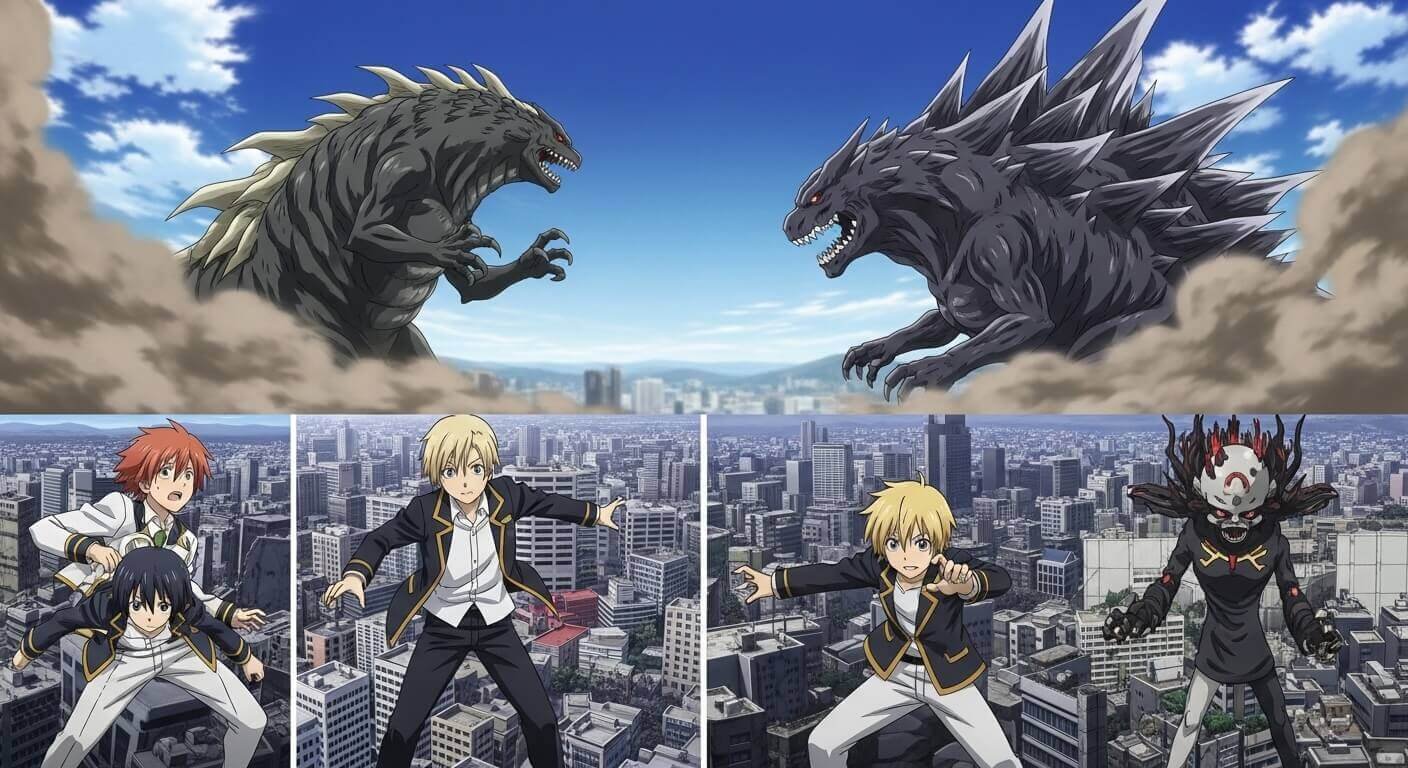
Anime monster content diverges from Western approaches in three fundamental ways that explain its distinct appeal.
Philosophical integration: Western monster media (Godzilla films, Stranger Things, Pacific Rim) typically treats monsters as external threats to overcome. Anime frequently raises philosophical questions about monsters—Parasyte asks if predator-prey hierarchies justify human dominance, Devilman explores whether human nature is more monstrous than demons, and Attack on Titan questions if the concept of “monster” depends entirely on perspective. Battles externalize internal conflicts.
Transformation as identity crisis: Western heroes who gain monster powers (Spider-Man, Hulk) usually maintain clear identity boundaries. Anime transformation is existential—Shinichi in Parasyte loses emotional responses and questions if he’s still human, Eren in Attack on Titan becomes what he swore to destroy, and Kaneki in Tokyo Ghoul (not covered here but relevant) experiences identity dissolution. The monster-human boundary is permeable and terrifying.
Aesthetic commitment to grotesque: Western productions often sanitize monster designs for broad audiences or rely on CGI that prioritizes realism. Anime fully embraces body horror, biological impossibility, and grotesque beauty—Titans are disturbing humanoid parodies, parasites reshape flesh like clay, and demons in Devilman are psychosexual nightmares. The medium’s animation freedom allows designs that would be impossible or too disturbing in live-action.
Anime monster battles differ from Western media through philosophical integration (monsters as existential questions rather than external threats), transformation as identity crisis (permeable boundaries causing genuine psychological dissolution), and aesthetic commitment to grotesque designs that embrace body horror Western productions typically sanitize.
Where to Watch Monster Anime in 2024
Crunchyroll hosts the largest selection: Attack on Titan, Parasyte, Kabaneri, God Eater, Claymore, Shin Sekai Yori, and Dorohedoro (select regions). Subscriptions start at $7.99/month with ad-free streaming.
Netflix offers Devilman Crybaby (exclusive), Ajin, Monster (regional availability), Dorohedoro, and Kabaneri. Their anime library varies significantly by region—use if titles aren’t available.
Funimation (now merged with Crunchyroll in some regions) carries Hellsing Ultimate, Gleipnir, Kemonozume, and Claymore. Check Crunchyroll first as libraries consolidate.
Hulu has Attack on Titan, Parasyte, Hellsing Ultimate, and Claymore through partnerships. Included with standard subscription.
Regional availability changes frequently. Use JustWatch.com to verify current streaming options in your country. Many older series cycle between platforms or require digital purchase when licenses expire.
Crunchyroll offers the widest monster anime selection (Attack on Titan, Parasyte, Dorohedoro), Netflix hosts exclusives like Devilman Crybaby and Ajin, Funimation/Hulu carry Hellsing Ultimate and Claymore—but regional availability varies, so verify current streaming through JustWatch before subscribing.
Frequently Asked Questions About Monster Anime
What is the best monster anime to start with?
Parasyte: The Maxim is the ideal starting point—24 episodes deliver a complete story with strategic battles, philosophical depth, and moderate darkness without requiring extreme tolerance. Attack on Titan is excellent but requires an 87-episode commitment. Parasyte balances accessibility with quality that satisfies both newcomers and veterans.
Is Monster considered the best psychological anime?
Monster is widely regarded as one of the best psychological thrillers in any medium, anime or otherwise. With an 8.9 rating on MyAnimeList, it’s praised for complex character development, a realistic European setting, and exploration of absolute evil. The 74-episode length intimidates some viewers, but fans consider it essential. Expect slow pacing—this is a thriller, not an action series.
What anime has the most brutal monster fights?
Devilman Crybaby and Hellsing Ultimate tie for most brutal. Devilman features psychedelic, nightmarish violence with apocalyptic-scale slaughter and complete nihilism. Hellsing embraces Gothic excess with rivers of blood, dismemberment, and over-the-top carnage. Both require high tolerance. For brutal fights with less graphic content, Attack on Titan delivers devastating strategic warfare.
What is the darkest monster anime?
Thematically, Shin Sekai Yori is darkest due to genocide, eugenics, and systematic atrocities committed by the protagonist society. Visually and tonally, Devilman Crybaby is darkest with graphic violence, sexual assault, and a conclusion that offers zero hope. Monster is psychologically darkest through manipulation and existential nihilism. “Darkest” depends on your definition.
Do I need to watch Attack on Titan in order?
Yes—Attack on Titan requires strict chronological order. Start with Season 1 (25 episodes), then Season 2 (12 episodes), Season 3 Part 1 (12 episodes), Season 3 Part 2 (10 episodes), and Season 4 Part 1-3 (28 episodes total). The plot builds on reveals and twists that lose impact if watched out of order. Avoid spoilers ruthlessly—the series’ power comes from narrative surprises.
Are there monster anime suitable for younger viewers?
Most monster anime listed here are rated TV-MA (17+) due to violence and themes. For younger teens (13+), Kabaneri of the Iron Fortress has moderate violence but lighter themes. My Hero Academia features “villains” more than monsters but offers action suitable for teens. Pokémon and Digimon are monster anime for children but have a completely different tone from this list’s focus.
What anime is similar to Attack on Titan?
Kabaneri of the Iron Fortress (same studio, similar apocalyptic survival theme) and God Eater (humanity’s last stand against overwhelming creatures) share Attack on Titan’s tone. For strategic warfare against monsters, Claymore delivers similar dynamics. For complex plot reveals and moral ambiguity, Shin Sekai Yori matches Attack on Titan’s later seasons. Nothing replicates its exact combination of elements.
Conclusion
Monster anime has matured far beyond simple creature features into sophisticated explorations of humanity’s relationship with the monstrous—both external and internal. The series covered here represent different battle philosophies and darkness types, ensuring you can find content matching your specific preferences rather than settling for generic recommendations.
Attack on Titan and Parasyte remain essential for good reason—they balance accessibility with depth. Devilman Crybaby and Monster push boundaries into genuinely challenging territory. Underrated gems like Shin Sekai Yori and Dorohedoro prove the genre still has unexplored potential.
Start with Parasyte if you’re new to monster anime, progress to Attack on Titan for strategic warfare, and venture into Devilman Crybaby or Monster only when ready for extreme content.
Verify streaming availability for your region before committing, and don’t hesitate to drop a series that doesn’t match your tolerance—these are demanding watches that reward investment but aren’t universally appealing.
The genre continues evolving. As new productions emerge, the standard these series set for integrating philosophical depth with spectacular battles ensures monster anime remains among the medium’s most compelling offerings.