
Introduction
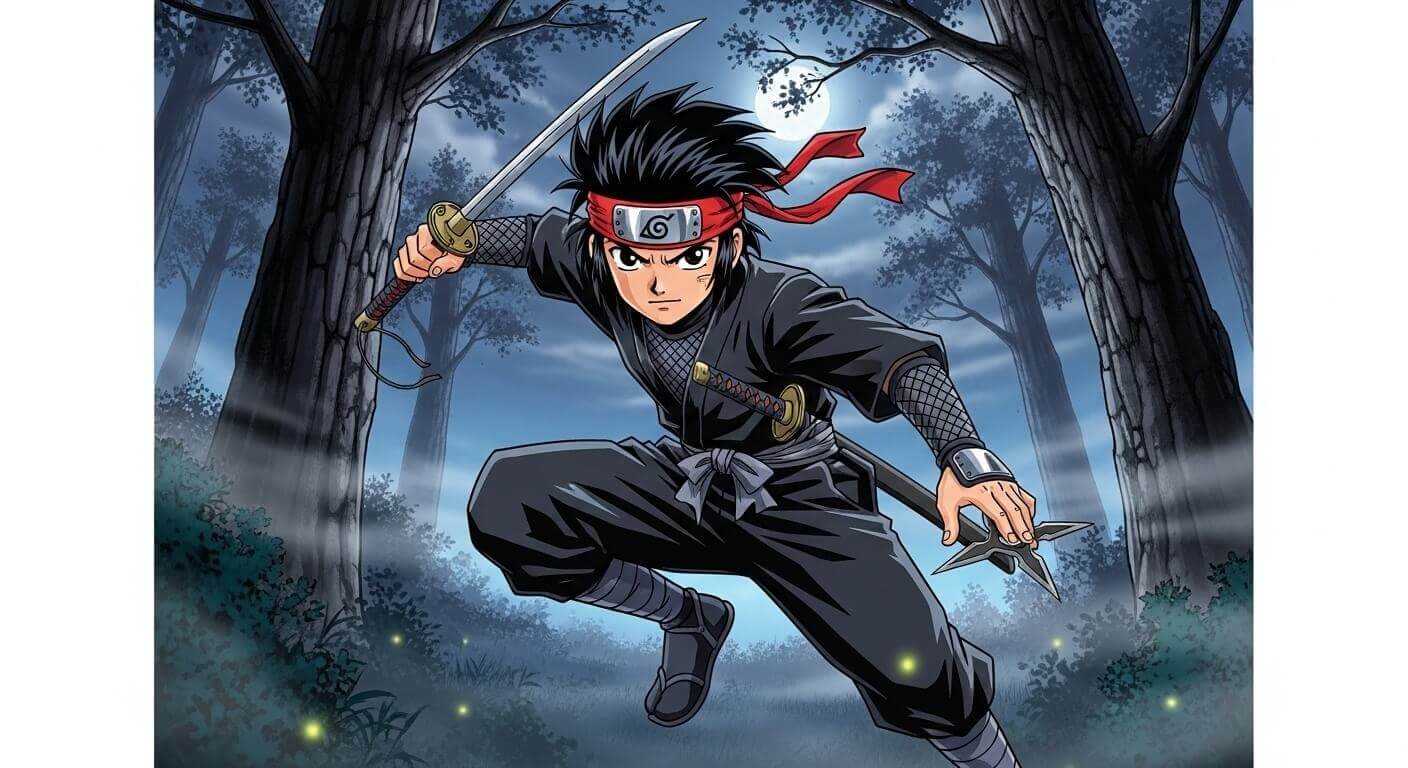
Masami Kurumada created one of the most beloved anime franchises in history with Saint Seiya. What most fans do not know is that four years before Seiya’s first chapter, Kurumada built the foundation for everything he would later perfect — in a ninja manga called Fuma no Kojiro.
This series ran in Weekly Shōnen Jump from January 1982 to November 1983. It was adapted into a 13-episode OVA between 1989 and 1992. It spawned a live-action drama in 2007, a sequel manga, and a brand-new gaiden manga that launched in 2022. Yet outside of dedicated Kurumada fans, almost nobody talks about it.
If you discovered this series through Saint Seiya, came here from a retro anime rabbit hole, or simply want to know whether Fuma no Kojiro is worth your time, this guide covers everything. The history, the story arcs, the characters, the OVA quality, the watch order, and exactly why this series deserves a permanent place in your collection.
What is Fuma no Kojiro?
Fuma no Kojiro (風魔の小次郎), meaning “Kojiro of the Fuma Clan,” is a manga series written and illustrated by Masami Kurumada. It was serialized in Shueisha’s Weekly Shōnen Jump from January 11, 1982 to November 21, 1983, collected into ten tankōbon volumes.
The series blends ninja action with fantasy mythology — a combination that feels immediately familiar to anyone who has seen Saint Seiya’s cosmic battles. Swords carry supernatural power. Clans represent ancient cosmic forces. Rivals are not mere villains but philosophical opposites of the hero.
The Story: Ninja Clans, Sacred Swords, and a 500-Year War
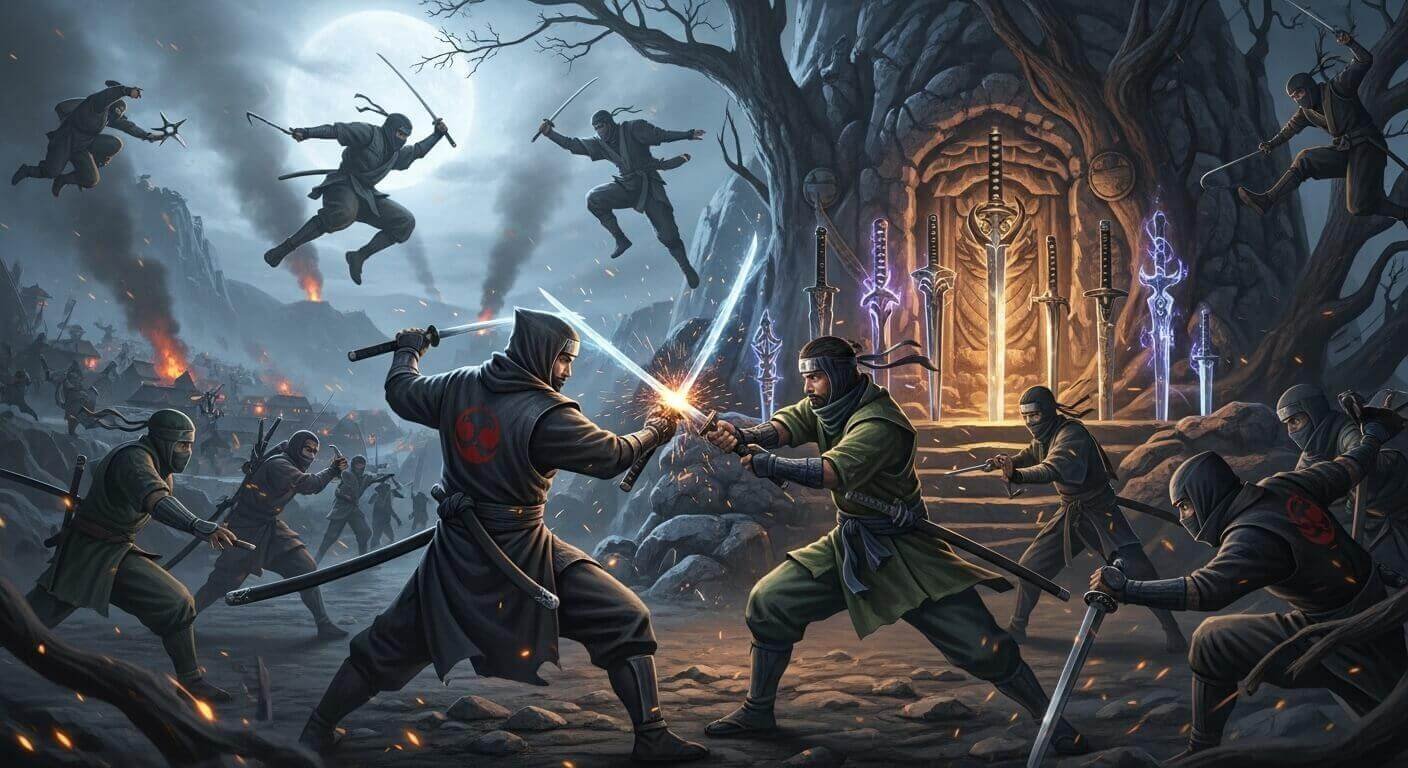
The plot of Fuma no Kojiro operates on two levels. On the surface, it is a school-based action story. Underneath it is an epic mythological conflict centuries in the making.
Hakuo Academy was once the most prestigious martial arts school in Japan. Its rival institution, Seishikan, has been poaching Hakuo’s best students through intimidation and mysterious injuries. Desperate to protect the school, the acting principal, Himeko Hojo, sends Ranko Yagyu to recruit the legendary Fuma ninja clan for help.
The Fuma sends their best warrior: Kojiro.
What begins as a school rivalry escalates into something far larger. Seishikan has enlisted the Yasha clan — the Fuma’s eternal rival, a bloodline they have been at war with for five hundred years. The conflict is no longer about two schools. It is the final chapter of a generational feud that cannot end until one clan is completely destroyed.
The Three Story Arcs
The series is structured across three distinct arcs, each adapted into its own OVA:
- Yasha-hen (Yasha Chapter): The Fuma vs. Yasha clan war, centered on Kojiro’s battles against Musashi Asuka and the Yasha generals. Six OVA episodes, 1989.
- Seiken Sensō-hen (Sacred Sword War Chapter): The discovery of ten legendary Sacred Swords triggers a new conflict between Cosmo Warriors and Chaos Warriors. Six OVA episodes, 1990.
- Fuma Hanran-hen (Fuma Rebellion Chapter): Three months after the Sacred Sword War, a splinter faction calling themselves the “Shinsei Fuma clan” forms within Kojiro’s own family — turning the final arc into a story of internal betrayal and identity. One 50-minute OVA episode, 1992.
The progression from street-level ninja combat to Sacred Sword mythology mirrors precisely what Kurumada would later do in Saint Seiya — moving from tournament arcs to Gold Saint battles to godly confrontations. The blueprint is identical.
Masami Kurumada’s Connection — Why This Matters to Saint Seiya Fans
Masami Kurumada (born December 6, 1953) is the manga artist behind Ring ni Kakero, Fuma no Kojiro, Saint Seiya, and B’t X — a body of work that shaped the entire bishōnen action manga genre. Shueisha officially called Ring ni Kakero “The Hot-Blooded Fighting Manga Bible” in 2014.
Fuma no Kojiro was Kurumada’s second major hit, published immediately after Ring ni Kakero ended in late 1981. It ran for two years and built a dedicated following — enough to justify a major OVA production seven years later, timed specifically to capitalize on the enormous wave of Saint Seiya’s popularity.
This timing matters. The OVA launched in June 1989, just two months after Saint Seiya’s TV anime concluded after 114 episodes. The same character designers — Shingo Araki and Michi Himeno — worked on both. The same stylistic fingerprint is visible in every frame.
For Saint Seiya fans, watching Fuma no Kojiro is like finding an early sketchbook from the same artist. The themes of brotherhood, sacrifice, cosmic destiny, and rivalries built on respect rather than hatred — they are all present in their earlier, rawer form.
The Fuma no Kojiro OVA was produced by Animate Film and J.C. Staff — a significant production pedigree for a 1989 release. It consists of 13 episodes total across three separate releases.
Arc 1 — Yasha-hen (1989)
Six episodes. Released between June 1 and August 2, 1989. This arc adapts the original manga’s Yasha Chapter directly and is widely considered the strongest of the three. The animation quality is at its peak here, the character introductions are sharp, and the rivalry between Kojiro and Musashi Asuka is built with genuine tension.
Arc 2 — Seiken Sensō-hen (1990)
Six episodes. Released between September 21 and December 1, 1990. The Sacred Sword War expands the mythology significantly, introducing Cosmo Warriors and Chaos Warriors — a direct precursor to Saint Seiya’s cosmic saint battles. The pacing is slightly looser than Yasha-hen, but the fight choreography improves.
Arc 3 — Fuma Hanran-hen (1992)
One 50-minute episode. Released November 21, 1992. The final arc compresses an entire manga story into a single long-form OVA. It is the most emotionally complex chapter — Kojiro must fight members of his own clan. The brevity is the only real weakness; this story deserved more runtime.
The music across all three OVAs deserves specific mention. Composer Toshiro Imaizumi blended dramatic orchestral passages with hard rock, creating a sound clearly distinct from the sweeping Seiji Yokoyama scores of Saint Seiya. The Night Hawks band performs the opening and ending themes for the first two arcs, with tracks like “SHOUT” standing as one of the finest Kurumada anime theme songs ever recorded.
Fuma no Kojiro Characters: The Key Players You Need to Know
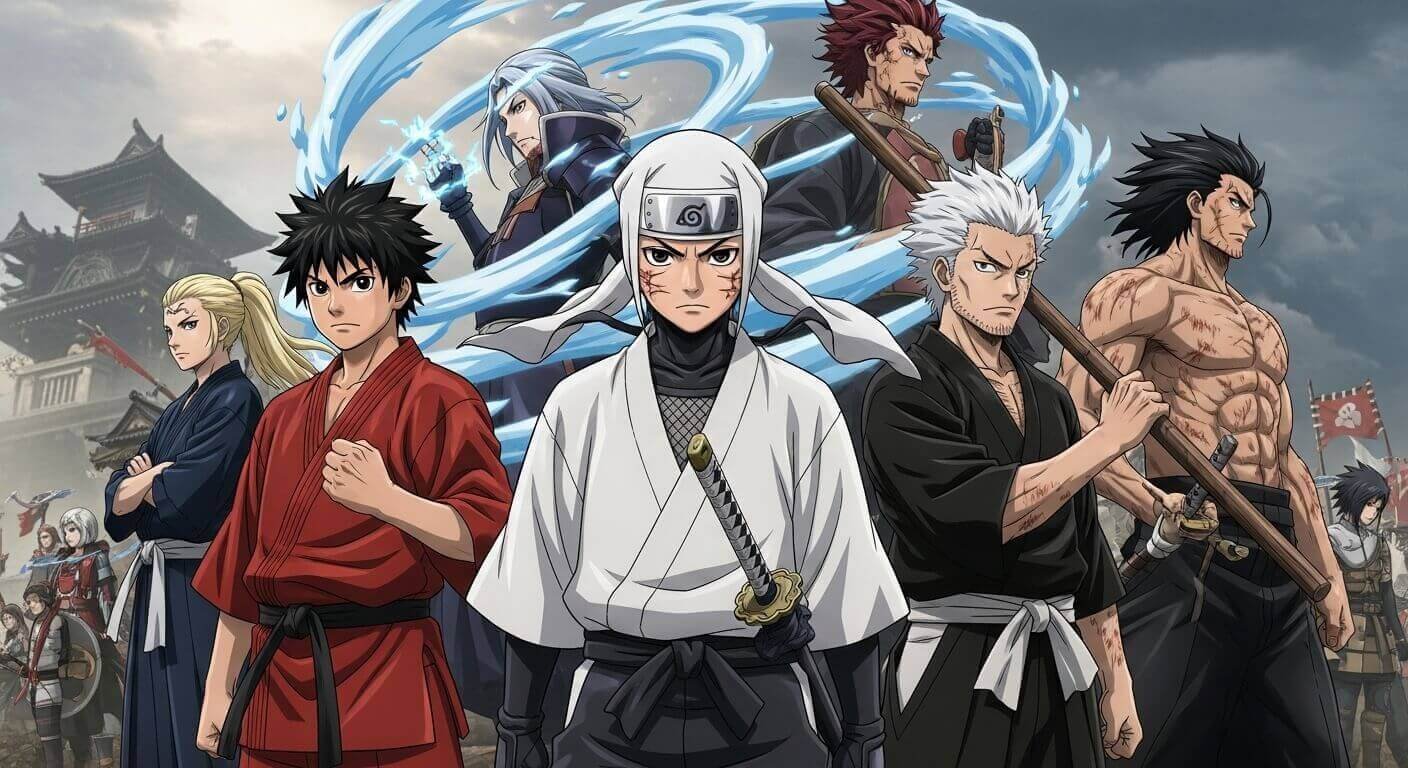
The character roster of Fuma no Kojiro follows the Kurumada template: a noble, emotionally driven hero surrounded by loyal companions, facing rivals who are honorable even in opposition.
Kojiro Fuma — The protagonist. A young ninja warrior sent by the Fuma clan leader to defend Hakuo Academy. Kojiro wields the Fuurin Kazan (Wind Forest Fire Mountain), one of the ten Sacred Swords. He fights with ferocious commitment but consistently shows mercy to defeated enemies — a trait that separates him from ordinary shōnen heroes.
Musashi Asuka — The primary rival and leader of the Yasha clan’s forces at Seishikan. Asuka wields the Ougonken (Golden Sword). He is not a villain. He is Kojiro’s equal in every dimension, and their rivalry is built on mutual recognition rather than hatred. This dynamic — the honorable rival who could have been an ally — is Kurumada’s most reliable dramatic device, used again with Ikki in Saint Seiya.
Ryoma — Kojiro’s closest ally within the Fuma clan. Calm, analytical, and unfailingly loyal. He provides the emotional counterweight to Kojiro’s intensity throughout all three arcs.
Ranko Yagyu — The connection between the human world and the Fuma clan. Her role expands significantly from the early chapters of the manga into the OVA, giving the story a civilian perspective amid the escalating supernatural warfare.
Where Does Fuma no Kojiro Fit in Kurumada’s Legacy?
Masami Kurumada created four major manga series across his career. In terms of global recognition, the ranking is clear:
- Saint Seiya — Worldwide phenomenon. 28 original volumes, 114-episode anime, decades of merchandise, and spinoffs
- Ring ni Kakero — Kurumada’s longest work at 51 volumes, deeply influential in Japan
- B’t X — 16 volumes, dedicated following
- Fuma no Kojiro — 10 volumes, critically underappreciated outside Japan
Fuma no Kojiro’s relative obscurity has two causes. First, it was a pre-Saint Seiya work, meaning it never received the global distribution that Seiya’s success would have guaranteed. Second, the OVA exists in a difficult licensing situation — no official English release has ever been produced. The only available English fansubs are translations of Spanish translations, with VHS-era video quality.
This is precisely what makes 2026 an interesting moment for the series. Kurumada launched a new gaiden manga — Fuma no Kojiro Gaiden: Asuka Mumeicho — in Champion Red in August 2022. The franchise is actively alive. The demand for a proper remaster or streaming release has never been stronger.
How and Where to Watch Fuma no Kojiro in 2026
This is the most frustrating aspect of the franchise for new fans: there is no official streaming release anywhere in the world.
The OVA series has never received an official English license. No Blu-ray release exists. No streaming platform — not Crunchyroll, not Netflix, not HIDIVE — carries it in any region.
Your realistic options in 2026 are:
- Japanese physical media — The OVAs were released on VHS and LaserDisc in Japan. Used copies surface on Yahoo Japan Auctions and Suruga-ya occasionally.
- Fan subtitles — An English fansub exists for all 13 episodes, though the first 11 are translated from a Spanish fansub, and the video quality reflects its VHS-rip origins. It is functional but not ideal.
- The manga — The original manga is available to read via fan translation on MangaDex under the title “Kojiro of the Fuma.”
The live-action 2007 drama adaptation (13 episodes, Tokyo MX) is similarly difficult to source officially but circulates in fan communities.
Is Fuma no Kojiro Still Worth Watching Today?
Watch it if you are a Saint Seiya fan. The connection is not superficial. The same artistic vision, the same dramatic architecture, the same emotional register — watching Fuma no Kojiro is the clearest possible window into how Kurumada’s creative instincts developed. Yasha-hen in particular holds up remarkably well for a 1989 production.
Watch it if you appreciate 80s/early 90s OVA aesthetics. The animation quality of the Yasha-hen arc is genuinely impressive for its era. The character designs by Shingo Araki and Michi Himeno carry the visual weight of the Saint Seiya anime with all its strengths.
Adjust expectations for the final arc. Fuma Hanran-hen compresses too much story into 50 minutes. The emotional payoff is present but rushed. This is not a flaw of the franchise — it is a production limitation. Knowing this going in saves frustration.
Read the manga alongside it. The original 10-volume manga by Kurumada is the fuller experience. The OVA adapts it faithfully but abbreviates. Reading both gives you the complete picture.
Fuma no Kojiro is not a perfect series. It is, however, a deeply earnest one — and in 2026, with retro anime experiencing serious critical reappraisal, earnestness is a rarer quality than it appears.
Conclusion
Three things matter most about Fuma no Kojiro.
First, it is the direct creative ancestor of Saint Seiya — the place where Masami Kurumada refined every thematic and structural element that would make his next series a global icon. Understanding this makes Saint Seiya richer, not just Fuma no Kojiro.
Second, it remains genuinely inaccessible to most Western fans due to a complete absence of official English licensing. This is not a quality problem. It is a visibility problem — and one that deserves to be corrected.
Third, the franchise is alive. A new Gaiden manga has been running since 2022. There has never been a better moment to discover Fuma no Kojiro, build an audience for it, and make the case for a proper remaster.
Start with the manga on MangaDex. Then track down the Yasha-hen OVA fansub. You will understand immediately why fans who know this series talk about it the way they do.
FAQs
How many episodes does Fuma no Kojiro have?
The Fuma no Kojiro OVA series consists of 13 episodes total. This breaks down into six episodes for Yasha-hen (1989), six episodes for Seiken Sensō-hen (1990), and one 50-minute episode for Fuma Hanran-hen (1992). Watch them in release order as each arc continues directly from the previous one.
Is Fuma no Kojiro related to Saint Seiya?
Fuma no Kojiro and Saint Seiya are not in the same universe, but they share the same creator — Masami Kurumada. Both series were made by the same character designers and share Kurumada’s signature themes of brotherhood, sacrifice, and honorable rivalry. Fuma no Kojiro predates Saint Seiya by four years and is widely considered a direct creative precursor to it.
Where can I read the Fuma no Kojiro manga in English?
The original Fuma no Kojiro manga has no official English release. Fan translations of the series are available on MangaDex under the title “Kojiro of the Fuma.” The sequel manga Yagyū Ansatsuchō and the 2022 gaiden Asuka Mumeicho are not currently available in English translation.
Is the Fuma no Kojiro live-action drama worth watching?
The 2007 live-action drama adaptation (13 episodes, Tokyo MX) is considered by many Kurumada fans to be the best adaptation of the Yasha Chapter. It significantly expands the characters and concept compared to the OVA. It starred Ryouta Murai as Kojiro. Sourcing it is difficult as no official release exists, but fans who find it tend to rate it highly.
Who is the main villain in Fuma no Kojiro?
Fuma no Kojiro does not have a single main villain in the traditional sense. The primary antagonist of the first arc is Musashi Asuka, leader of the Yasha clan’s forces — but he is presented as an honorable rival rather than an evil character. Subsequent arcs introduce new antagonists, with the final arc’s most painful conflict coming from within the Fuma clan itself.
Did Fuma no Kojiro get a new manga recently?
Yes. In August 2022, Masami Kurumada launched Fuma no Kojiro Gaiden: Asuka Mumeicho in Champion Red magazine. This is the most recent addition to the franchise and focuses on Asuka’s storyline. A short prequel series, Jo no Maki, also ran in Champion Red in 2019.
How does Fuma no Kojiro compare to other classic Kurumada works?
Among Kurumada’s four major series, Fuma no Kojiro sits as his fourth most well-known but remains critically underappreciated. It lacks the global distribution of Saint Seiya and the length of Ring ni Kakero, but fans who engage with it consistently find its thematic depth and character dynamics to be on par with Kurumada’s best work. The OVA’s animation quality for its era is a genuine achievement.