
Introduction
Every great mythology needs a force that exists beyond good and evil — a being that doesn’t just destroy, but is destruction itself. The chaos dragon fills that role across thousands of years of human storytelling, and its origin is far older and stranger than most people realize.
If you’ve searched for what a chaos dragon actually is — where it comes from, what drives it, why every fantasy world seems to invent one — you’ve probably found surface-level lists that tell you nothing about the creature’s actual depth. This article fixes that.
Here, you’ll get the full picture: the real mythological lineage of the chaos dragon, the internal logic of its powers, its moral complexity, and why it keeps appearing everywhere from ancient Babylon to modern tabletop RPGs.
What Is a Chaos Dragon?
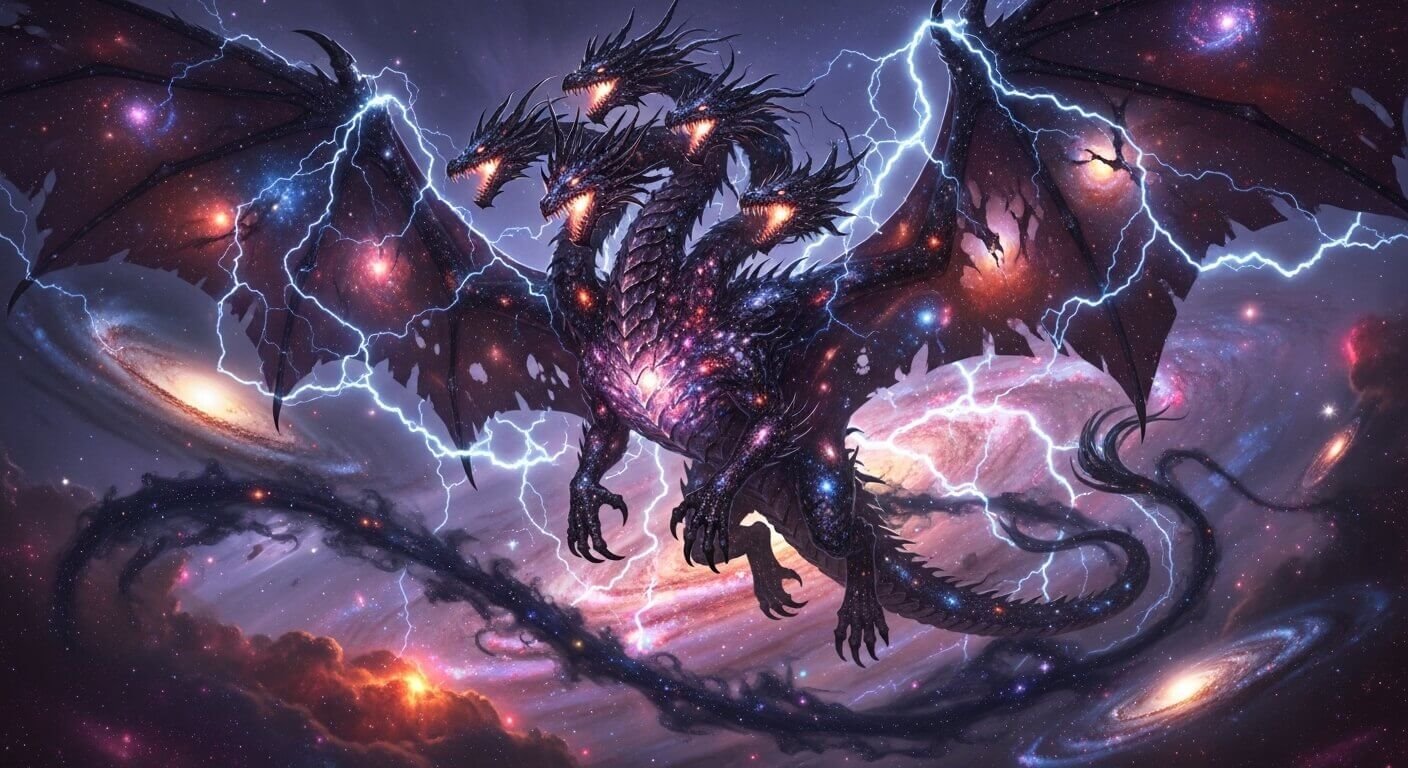
A chaos dragon is a mythological or fictional dragon archetype defined not by fire or flight, but by its fundamental opposition to order, structure, and reality itself. It is typically portrayed as a primordial force — not a creature that causes chaos, but one that is chaos given draconic form.
The distinction matters. Most dragons in mythology represent something: wisdom, greed, nature, death. The chaos dragon represents the state that precedes all of those things — the void before the world was shaped, the entropy that unmakes what creation builds.
In fantasy taxonomy, chaos dragons sit at the apex of destructive archetypes. They are not malicious in the human sense. Malice requires intent. The chaos dragon operates more like a natural law — the same way a hurricane doesn’t hate the coastline it obliterates.
Chaos vs. Order: The Fundamental Divide
The chaos dragon cannot be understood without its opposite: the order dragon, the law dragon, or whatever a given mythology calls the force of cosmic structure. This binary — chaos and order as equal, opposing absolutes — is one of the oldest conceptual frameworks in human thought.
In Zoroastrian cosmology, for instance, reality itself is the battleground between Spenta Mainyu (the creative spirit) and Angra Mainyu (the destructive spirit). The chaos dragon embodies that destructive half, not evil in the moralistic sense, but entropic, opposed to form at the deepest level.
The Mythological Roots of the Chaos Dragon
The chaos dragon has direct antecedents in Babylonian, Egyptian, and Norse mythology. Tiamat, Apophis, and Jörmungandr each represent a version of the same archetype: a primordial, serpentine chaos force that predates or opposes the ordered cosmos. These are the true ancestors of every chaos dragon in modern fiction.
Most fantasy writers who create chaos dragons don’t realize they’re drawing on a 4,000-year-old template. The pattern is remarkably consistent across cultures that had no contact with one another, suggesting that the chaos dragon archetype taps into something fundamental about how humans conceptualize the universe.
Tiamat: The Babylonian Mother of Chaos
Tiamat is the oldest and most direct ancestor of the chaos dragon in the historical record. In the Enuma Elish — the Babylonian creation epic dating to approximately 1,100 BCE — Tiamat is the primordial salt-water ocean, described as a dragonlike entity whose body is literally used to build the world after she is defeated.
The detail that deserves more attention: Tiamat isn’t a villain from the start. She is the origin of everything. The younger gods disturb her. She becomes destructive only in response to the disruption of primordial stillness. This is the chaos dragon’s core paradox — it was here first, and order is the intruder.
Her defeat by the god Marduk doesn’t destroy chaos. It contains it. The world is built from chaos, not instead of it.
Apophis and the Egyptian Serpent of Unmaking
Ancient Egyptians conceived of Apophis (also written Apep) as an enormous serpent of pure negation — not death, not evil, but the literal undoing of existence. Each night, Ra’s solar barque had to fight through Apophis to bring dawn. If Apophis ever won a single night, the sun would not rise, and reality would collapse.
What makes Apophis distinctly chaos-dragon-like is that he cannot be permanently killed. He is cut, burned, and destroyed every single night by the gods — and reconstituted by the following evening. Chaos, in this framework, is indestructible because it is the default state of the universe. Order is the achievement. Chaos is what you get when you stop trying.
Norse mythology contributes Jörmungandr — the World Serpent — whose release from the ocean floor signals Ragnarök, the end of the world. Like Tiamat and Apophis, Jörmungandr is not malevolent in a human sense. It simply is what happens when the current world-age ends.
Born from the End: How the Chaos Dragon Originates
In most mythological and fantasy traditions, a chaos dragon is not born like other creatures — it emerges from destruction itself. Specifically, the chaos dragon is the form that reality takes when order collapses completely. It is the world’s ending given a body. This is why chaos dragons appear most often in apocalyptic narratives: they are the apocalypse’s consciousness.
This is the concept most existing content completely misses, and it is the most important thing to understand about the creature.
A fire dragon is born from flame. A sea dragon rises from the water. A chaos dragon is born from endings. It requires a sufficient accumulation of destruction — collapsed civilizations, extinguished gods, unmade worlds — before it can coalesce.
Think of it this way: chaos is not a substance. It is an absence. The chaos dragon is what fills that absence when everything else is gone.
The Destruction Loop: Death Creates the Chaos Dragon
This origin mechanic creates a self-reinforcing loop that mythology instinctively recognized and fantasy writers keep rediscovering. The chaos dragon’s birth requires destruction. But its existence causes more destruction. Which generates more chaos? Which makes the dragon stronger.
Ancient mythologies “solve” this loop through divine intervention — a hero-god who fights the chaos entity back to a manageable level, not eliminating it but binding it. The Babylonian Marduk, the Norse Thor, the Hindu Indra slaying Vritra — the pattern repeats because the underlying logic is sound. You don’t destroy chaos. You hold it.
Modern fantasy has inherited this logic faithfully. The chaos dragon in games like Dungeons & Dragons (specifically the deity Tiamat) and world-building systems like Brandon Sanderson’s Cosmere echoes this ancient template: chaos bound, not annihilated.
What Powers Does a Chaos Dragon Have?
A chaos dragon’s powers derive directly from its nature as a personification of entropy. Rather than elemental breath weapons, it typically wields reality distortion, probability manipulation, structural dissolution, and anti-magic fields. These are not arbitrary abilities — they are the logical expression of a being that predates and opposes ordered reality.
Understanding why a chaos dragon has its powers makes them far more interesting than any list of stats.
If chaos is the absence of structure, then a chaos dragon disrupts structure wherever it exists. Physical laws become unstable in its presence. Magic — which is itself an ordered system of rules — either fails or behaves unpredictably. Space and time, both forms of cosmic order, warp around it.
The powers most consistently attributed to chaos dragons across myth, game, and fiction include:
- Reality distortion — the local environment becomes physically unstable, and landscapes shift
- Anti-order aura — spells, divine power, and structured systems degrade in proximity
- Probability corruption — cause and effect become unreliable; the chaos dragon is a walking statistical anomaly
- Regeneration from destruction — like Apophis, damage accelerates its growth rather than weakening it
- Formlessness — some traditions describe the chaos dragon as partially or fully incorporeal, reflecting chaos’s nature as a pre-physical state
The single most important power is the last one most people think about: the chaos dragon corrupts meaning. Language, symbols, names — all systems of order — lose coherence near it. This is why chaos dragons in advanced lore are often described as impossible to name, categorize, or fully perceive.
Is the Chaos Dragon Good or Evil?
The chaos dragon is neither good nor evil in the moral sense — it operates outside that framework entirely. Calling a chaos dragon “evil” is like calling an earthquake evil. It destroys because that is its nature, not because it harbors malice. However, from the perspective of ordered, living beings, the chaos dragon’s existence is an existential threat by definition.
This is the question that generates the most debate in lore communities, and most content handles it badly by defaulting to a simple answer.
The philosophical reality is more precise. Moral categories require agency — the ability to choose between actions. A chaos dragon, in its purest mythological form, doesn’t choose to destroy. It is destruction. Moral judgment of a chaos dragon is like judging gravity for pulling someone off a cliff.
That said, modern fantasy complicates this usefully. Many contemporary portrayals give chaos dragons genuine intelligence, memory, and even something resembling a worldview. A chaos dragon that chooses to destroy — that finds satisfaction in unmaking — is making a moral decision. This is the version that functions as a compelling villain: not a force of nature, but a being that has embraced its own nature as a philosophy.
The most sophisticated portrayals hold both truths simultaneously. The chaos dragon is beyond morality in origin, but not necessarily in expression.
The Chaos Dragon in Modern Fantasy and Games
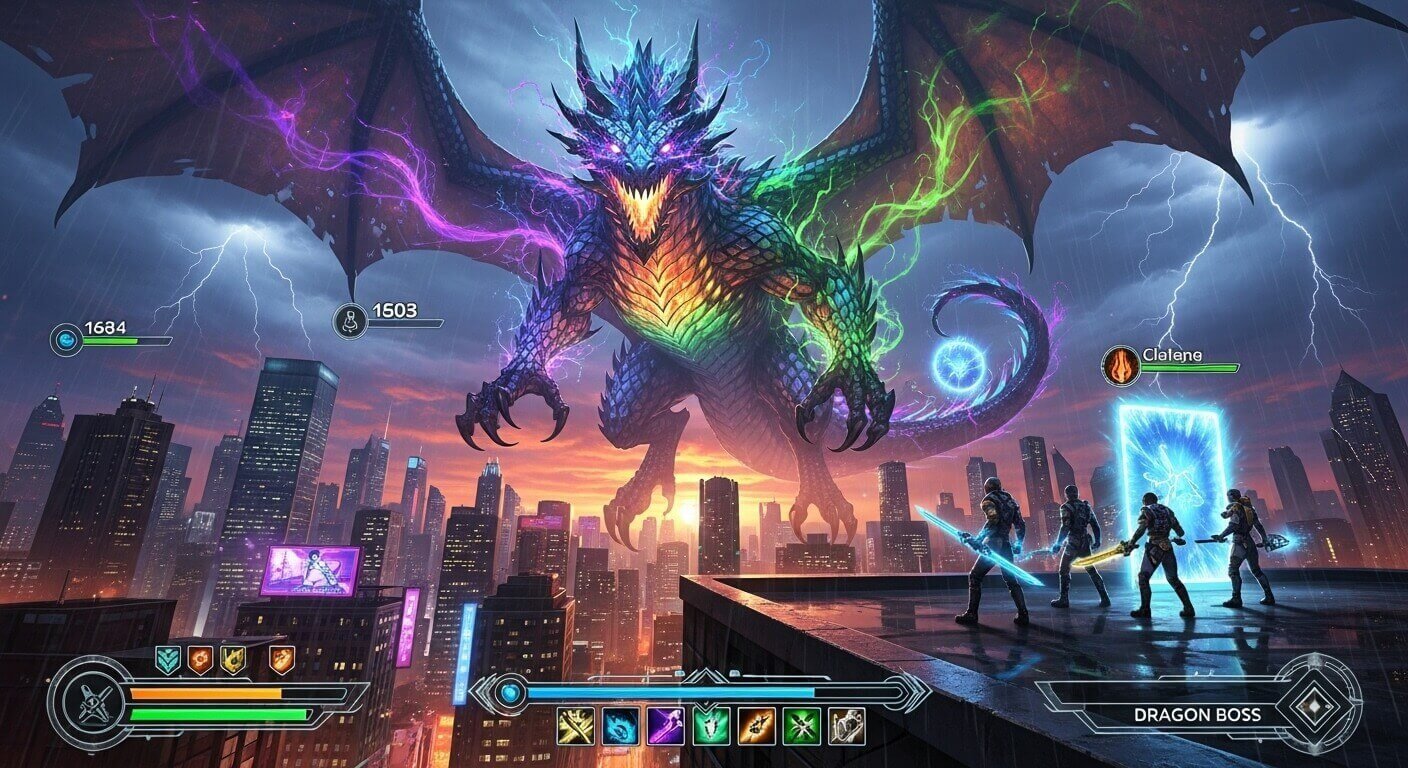
The chaos dragon appears across virtually every major fantasy medium — tabletop RPGs, video games, novels, and anime — almost always retaining its core mythological identity as a primordial force of entropy. Its most recognizable modern form is Tiamat in D&D, but the archetype extends across dozens of IPs under different names.
The archetype’s durability across media is itself revealing. Creators keep returning to the chaos dragon because it solves a specific narrative problem: how do you create a threat that feels genuinely cosmological, not just very powerful?
A powerful villain can be matched by a powerful hero. A chaos dragon cannot be “defeated” in the traditional sense — it can only be bound, redirected, or temporarily contained. That narrative constraint forces writers into more interesting territory than simple combat resolution.
Video Games and TTRPGs
In Dungeons & Dragons, Tiamat serves as the five-headed dragon goddess of evil chromatic dragons — a direct lift from Babylonian mythology, name included. Her five heads represent the five chromatic dragon types, but her underlying nature is pure chaos-as-malevolence. She is bound in the Nine Hells, not destroyed, because destruction is impossible.
Video game series including Final Fantasy, Dark Souls, and Dragon Age each deploy chaos dragon variants under different names. In Dark Souls, the Everlasting Dragons predate the Age of Fire — they are literally the pre-ordered state of the world, existing before concepts like life and death were distinct. This is Tiamat’s cosmological logic translated into game mechanics with stunning fidelity.
Anime series like Chaos Dragon: Seething Dragon (2015) made the archetype explicit in its title, centering on a dragon whose awakening signals catastrophic world-ending events — the destruction loop in direct narrative form.
What Does the Chaos Dragon Symbolize?
The chaos dragon symbolizes the universe’s foundational indifference to human order — the entropic tendency of all systems to dissolve. More deeply, it represents humanity’s anxiety about the fragility of civilization: everything we build exists against a background of chaos that was here first and will outlast us. The chaos dragon makes that anxiety visible and gives it a face.
Symbolism matters because it explains why a 4,000-year-old mythological concept keeps regenerating across cultures and media. The chaos dragon isn’t popular because it’s a cool monster. It’s popular because it represents something humans genuinely fear at a deep level.
Three layers of meaning are most consistent across traditions:
Entropy and impermanence. Every structure decays. Every civilization falls. Every star burns out. The chaos dragon is the personification of that thermodynamic reality — the universe’s default state asserting itself against temporary human achievement.
The cost of the order. The order isn’t free. It requires constant effort, maintenance, and sacrifice. The chaos dragon exists as a reminder that the moment you stop maintaining civilization, chaos fills the void. This is why chaos dragon myths so often center on divine or heroic beings who must fight it repeatedly — not once, but every day, every cycle.
Creative destruction. Several traditions — most notably Hinduic and Taoist frameworks — treat chaos not as purely negative but as the precondition for new creation. Destruction clears the field. The chaos dragon, from this angle, is not the enemy of life but the mechanism by which exhausted forms make way for new ones.
This third layer is what the most interesting modern portrayals explore: a chaos dragon that isn’t evil, but necessary.
FAQs
What is the origin of the chaos dragon?
The chaos dragon originates in ancient Babylonian, Egyptian, and Norse mythology through figures like Tiamat, Apophis, and Jörmungandr — primordial serpentine entities representing the pre-ordered state of the universe.
In modern fantasy, the chaos dragon inherits this lineage and is typically portrayed as a being that emerges from catastrophic destruction, not as a creature that is born but as a force that coalesces when order collapses.
Is the chaos dragon based on real mythology?
Yes. The chaos dragon has direct roots in verifiable ancient mythology. Tiamat from the Babylonian Enuma Elish (circa 1,100 BCE) is the clearest ancestor — a primordial dragonlike entity whose body becomes the world after her defeat.
Apophis in Egyptian cosmology and Jörmungandr in Norse myth follow the same template: a vast serpentine chaos force that opposes cosmic order and cannot be permanently destroyed.
Is the chaos dragon good or evil?
In its purest mythological form, the chaos dragon is neither — it operates outside moral categories because it lacks agency in the human sense. It destroys not from malice but from nature. However, many modern fantasy portrayals add intelligence and genuine choice to chaos dragons, creating versions that are morally complex or explicitly villainous.
The most nuanced portrayals treat the chaos dragon as a force that transcends good and evil while acknowledging that its existence is existentially threatening to ordered beings.
What powers does a chaos dragon have?
A chaos dragon’s powers flow logically from its nature as personified entropy. These typically include reality distortion, the disruption of magic and ordered systems, probability corruption, immunity to permanent destruction (mirroring Apophis’s nightly reconstitution), and, in advanced lore, the corruption of language and meaning itself.
Its most dangerous trait is not physical power but the destabilization of the structures — physical, magical, metaphysical — that other beings depend on to exist.
How does a chaos dragon differ from other dragons?
Standard dragon archetypes (fire, ice, nature) are forces within the world. A chaos dragon exists in opposition to the world’s existence as an ordered place. A fire dragon breathes flame because it is associated with elemental fire.
A chaos dragon disrupts reality because it is the state that precedes and underlies all elemental reality. It is less a creature and more a cosmological event with a body.
Where does the chaos dragon appear in modern fantasy?
The chaos dragon appears across virtually every major fantasy medium. Most prominently: Tiamat in Dungeons & Dragons (directly named from Babylonian mythology), the Everlasting Dragons in Dark Souls, chaos dragon variants across Final Fantasy, Dragon Age,
and dozens of anime series, including Chaos Dragon: Seething Dragon (2015). The archetype persists because it solves a specific narrative problem — creating a threat that feels genuinely cosmological rather than merely powerful.
What does the chaos dragon symbolize?
The chaos dragon symbolizes entropy — the universe’s inherent tendency toward disorder — and humanity’s anxiety about the fragility of everything we build. It represents the pre-ordered state of the cosmos that civilization exists in constant resistance against.
In more nuanced traditions, it also symbolizes creative destruction: the necessary dissolution of exhausted forms to allow new creation. This dual symbolism (pure threat vs. necessary force) is what keeps the archetype philosophically interesting across millennia.
Conclusion
The chaos dragon isn’t a fantasy invention. It is one of the oldest conceptual frameworks in human storytelling — the force that was here before the world was shaped and will outlast the world’s ending.
Three things define it above everything else. First, it originates from destruction, not alongside it — it coalesces when enough order collapses.
Second, it cannot be permanently defeated, only bound, because chaos is the universe’s default state, and order is the exception. Third, it operates outside moral categories in its purest form, though modern portrayals productively complicate that by adding genuine agency.
If you’re building a world, writing a story, or simply trying to understand why this archetype refuses to die across 4,000 years of human culture — the answer is that the chaos dragon names something real: the entropy that underlies every civilization, the end waiting at the edge of every ordered thing.
Featured image suggestion: A chaos dragon coalescing from the ruins of a shattered world — fragmented earth, inverted sky, reality visibly distorting at the edges. Alt text: “chaos dragon emerging from apocalyptic destruction, primordial form dissolving reality around it.”
In-article image 1: Ancient Babylonian Tiamat relief or artistic reconstruction. Alt text: “Tiamat, Babylonian chaos dragon origin, ancient mythology, artwork.”
In-article image 2: Chaos vs. order dragon side-by-side symbolic illustration. Alt text: “chaos dragon versus order dragon cosmic duality symbolic fantasy art.