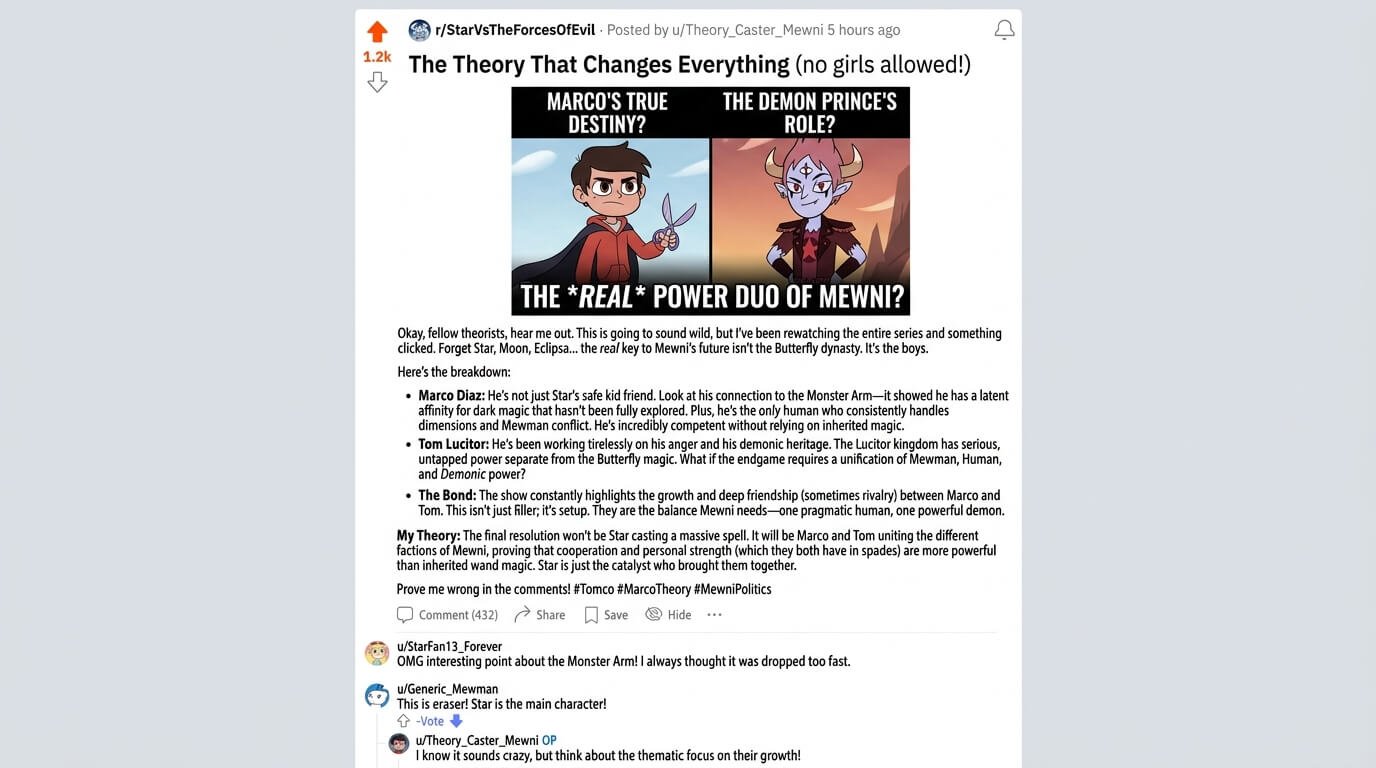
Introduction
Years after the finale, the fandom remains locked in a fierce debate over the ending of Star vs. the Forces of Evil. For many, the destruction of magic and the “Cleave” felt abrupt, confusing, or even selfish on the part of its protagonist.
You’ve likely scoured forums and watched video essays, yet the feeling that a crucial piece of the puzzle is missing persists. This article delivers the answer: a unified theory, born from countless Reddit Star vs the Forces of Evil threads, that reframes the entire series not as Star’s journey, but as the masterfully executed plan of its most enigmatic character.
This isn’t just another list of “what-ifs.” This is the theory that connects every major event—from Toffee’s crusade to Eclipsa’s trial and Star’s final choice—into a single, cohesive, and mind-bending narrative.
-
The Unsolved Mystery: Why is the SVTFOE Finale So Controversial?
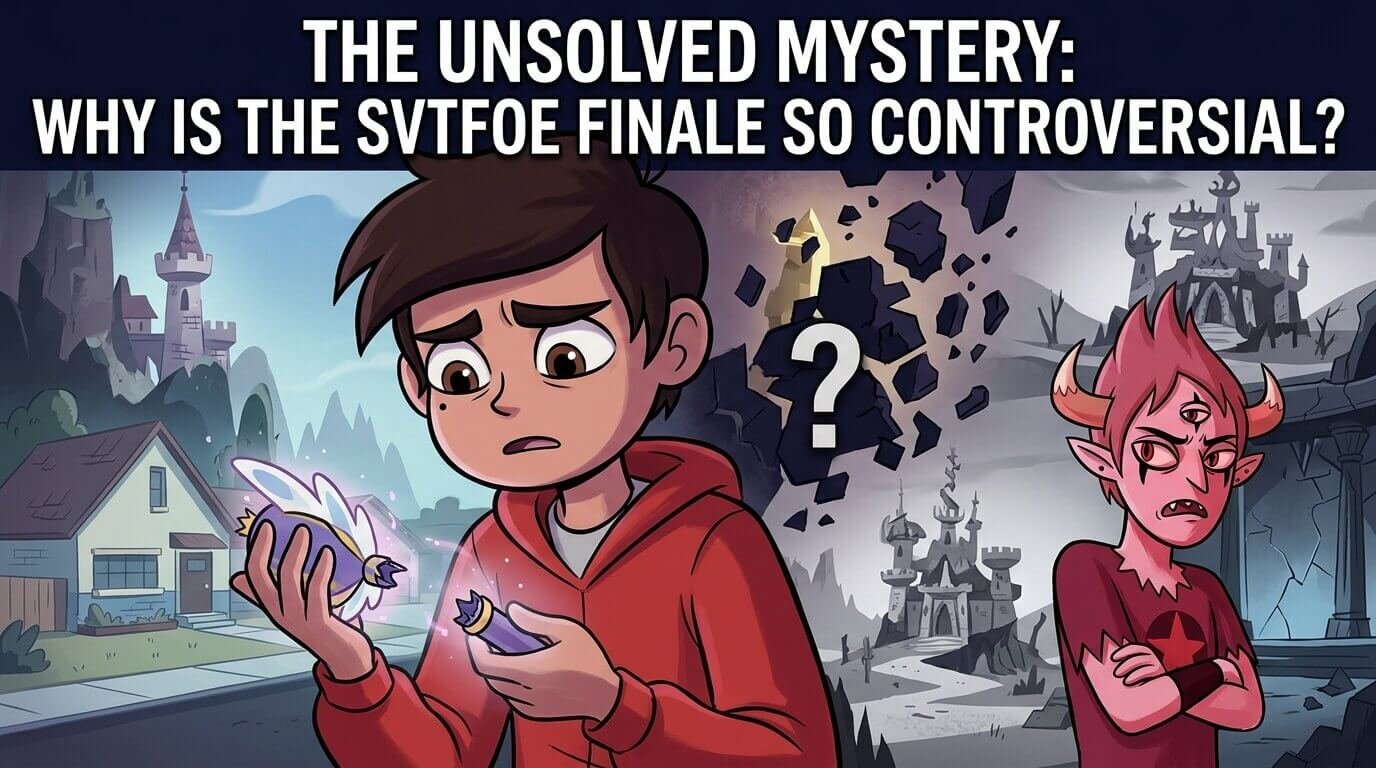
The Star vs. the Forces of Evil finale is controversial because it frames the destruction of all magic—the show’s central power system—as a heroic act.
Critics argue Star’s decision was selfish, poorly justified, and had catastrophic, unaddressed consequences for the entire multiverse, while supporters see it as the only way to end the Butterfly family’s tyrannical cycle.
The finale, “Cleaved,” presents a fundamental paradox. Star Butterfly, a magical princess, decides the only way to stop the Solarian warrior Mina Loveberry and end the systemic prejudice on Mewni is to destroy the very source of her power: the Realm of Magic.
The result is the “Cleaving,” where Earth and Mewni merge into a single new world, allowing Star and Marco to be together.
On the surface, it’s a romantic, if bittersweet, conclusion. Yet, the Reddit Star vs. the Forces of evil community immediately highlighted several critical problems:
- Moral Ambiguity: Did Star commit a form of multiversal genocide by destroying magic, which was sentient and powered countless dimensions?
- Character Assassination: Many felt the decision was out of character for Star, reducing her complex journey to a simple desire to be with her boyfriend.
- Unanswered Questions: What happened to the Magic High Commission? Is Glossaryck truly gone? How does this new “Earth-ni” function?
These unresolved issues created a schism in the fandom that persists today. The ending feels incomplete because we’ve been looking at the wrong protagonist.
The Core Theory: Glossaryck as the Grandmaster Puppeteer
The unified theory posits that Glossaryck, not Star, was the true protagonist (or antagonist) of the series. He subtly manipulated every major character and event—including the actions of Toffee, the return of Eclipsa, and Star’s training—with the singular goal of forcing the destruction of institutionalized magic, which he viewed as a corrupting force.
Glossaryck is often dismissed as a quirky, pudding-loving mentor. This is a deliberate misdirection. He is an ancient, cosmic being with knowledge far beyond anyone else’s. From this perspective, every major plot point becomes a calculated move on his cosmic chessboard.
The First Puppet: Toffee’s “Justifiable” Crusade
Toffee of Septarsis is introduced as the show’s most formidable villain. His goal is absolute: the destruction of magic. Why? Because magic, specifically that wielded by the Butterfly family, was responsible for the genocide of his people and the colonization of Mewni. Glossaryck, residing in the spellbook, was in a perfect position to influence events.
The theory suggests Glossaryck understood that a direct assault on magic would fail. He needed an inside agent. He allowed the spellbook to fall into Ludo’s—and by extension, Toffee’s—hands.
Toffee’s corruption and destruction of the wand in “Storm the Castle” wasn’t a victory for evil; it was Phase One of Glossaryck’s plan. It proved to the universe that the royal magic was vulnerable and corruptible.
The Second Act: Eclipsa’s Return and the Questioning of Authority
With the old magic broken, a new form was born. Who was the expert on its darkest aspects? Eclipsa, the Queen of Darkness. Glossaryck’s “death” and subsequent regression into a babbling state were a ruse. It placed him directly in Star’s care, allowing him to guide her toward the one person who could teach her to question the Magic High Commission’s authority.
As Star fought for Eclipsa’s freedom, she was forced to confront the lies her family was built on. She learned about the monster prejudice, the stolen throne, and the hypocrisy of the Commission. This was Phase Two.
Glossaryck wasn’t just teaching Star new spells; he was teaching her to deconstruct the entire system she was meant to inherit. As noted by many fans on Reddit, his nonsensical ramblings of “Globgor” were a direct clue, pushing Star towards the truth.
The Final Move: Pushing Star to Destroy Her Own Birthright
By the final season, the stage was set. Mina Loveberry, a fanatical product of Solaria’s regime, became the embodiment of everything wrong with magical rule. She was an unstoppable force created and enabled by the old queens.
Star was left with an impossible choice, a scenario Glossaryck had meticulously engineered over generations. He had shown her the corruption (through Toffee), revealed the historical lies (through Eclipsa), and presented her with an unsolvable problem (Mina). His final lesson, the “Whispering Spell,” was the key.
He didn’t just teach it to Star; he taught it to Moon and Eclipsa, knowing one of them would eventually be pushed far enough to use it. Star destroying the magic wasn’t a rash, teenage decision—it was the logical, final move in a game only Glossaryck understood.
Was Toffee Right All Along? A New Perspective
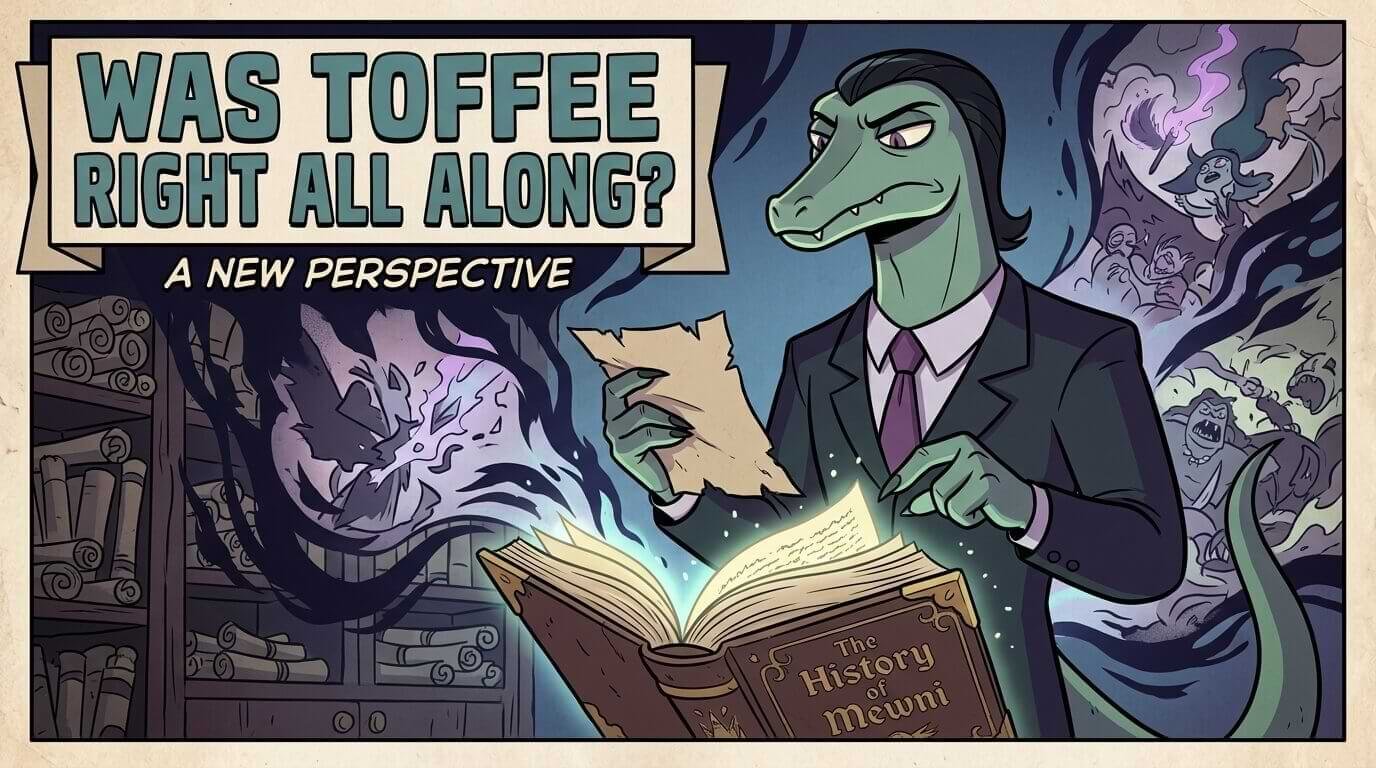
Within the framework of the Glossaryck theory, Toffee was not necessarily “right,” but he was a necessary and deliberately utilized catalyst. His anti-magic crusade, born from personal tragedy, served as the perfect external pressure to expose the deep-seated corruption of the Butterfly monarchy and the Magic High Commission, setting the stage for magic’s eventual destruction.
Toffee’s famous line, “I’m the one who’s not a disappointment,” takes on new meaning. He succeeded where others failed because his goal aligned perfectly with Glossaryck’s endgame. He was a radical whose methods were monstrous, but his diagnosis of the problem—that the Butterfly family’s monopoly on magic was a source of endless suffering—was fundamentally correct.
This reframes him from a simple villain into a tragic anti-villain, a pawn in a much larger cosmic game. He believed he was fighting for his people’s memory, but in reality, he was the first domino pushed over by a far more powerful entity. The analysis of his motives remains a hot topic on Reddit Star vs the Forces of Evil forums.
Re-evaluating the “Cleave”: A Deliberate Reset, Not a Teenage Mistake
The “Cleave” is re-contextualized as the intended final outcome of Glossaryck’s plan. It was not a side effect of Star’s choice but the ultimate goal: a forced integration and reset of the universe, free from the hierarchical and corrupting influence of the Realm of Magic. It’s the physical manifestation of ending the old world’s divisions.
If you accept the Glossaryck theory, the merging of Earth and Mewni isn’t a convenient plot device to ensure a Starco ending. It’s the point of the whole story. Glossaryck, a being of pure logic, saw a system that repeatedly produced tyranny, genocide, and suffering.
His solution was radical: remove the variable causing the problem (institutional magic) and force the disparate parts (Mewni and Earth, Monsters and Humans) to integrate into a new, balanced whole.
Star’s love for Marco was the emotional leverage Glossaryck needed. He knew she would be willing to sacrifice her royal birthright for a future with him, but only if she believed it was the only way. The threat of Mina and an eternity separated from Marco provided the perfect motivation to make the ultimate sacrifice, which was, in fact, the final move of Glossaryck’s plan.
What This Reddit Star vs the Forces of Evil Theory Means for the Lore
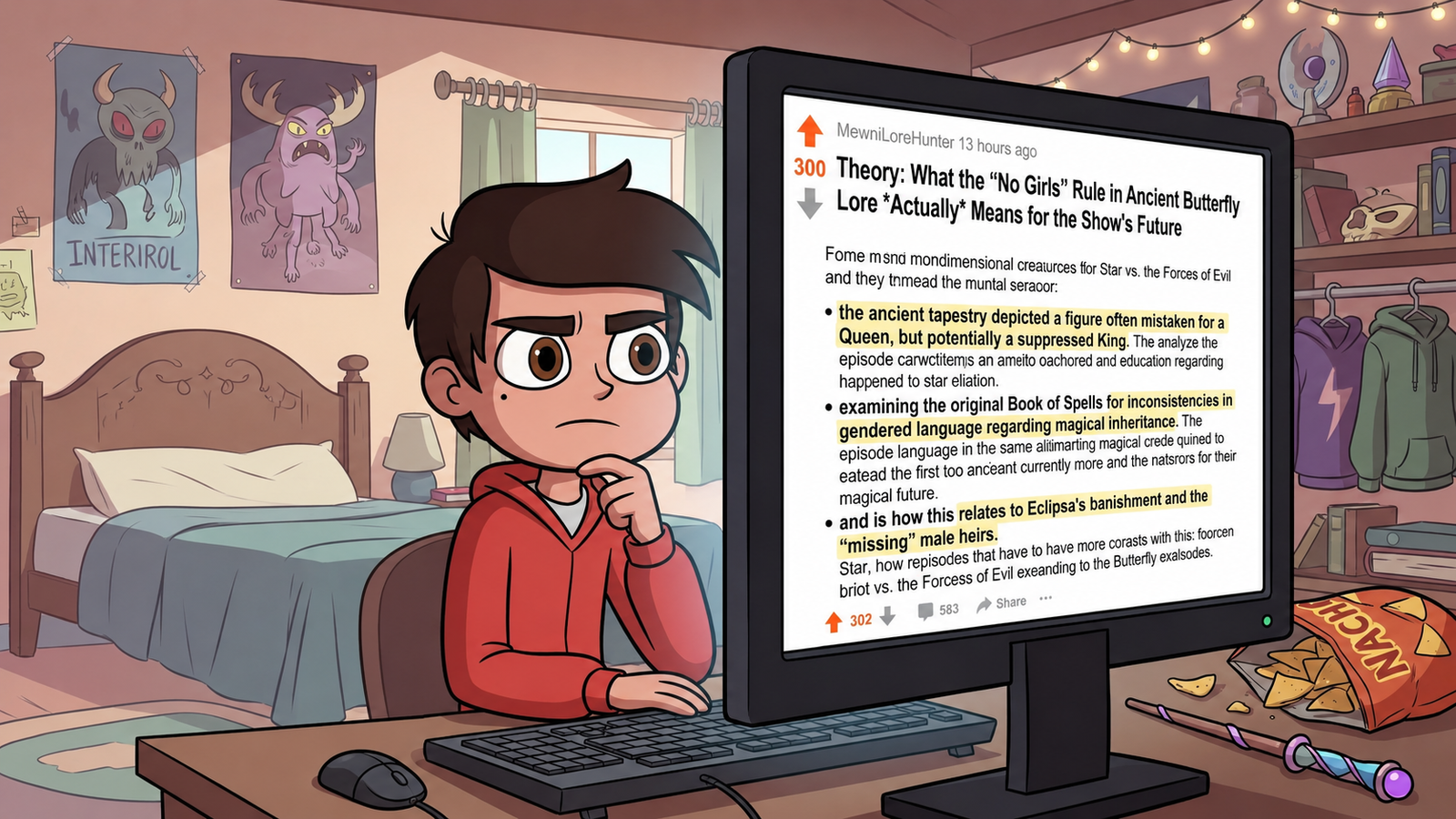
This theory fundamentally alters the show’s lore by establishing Glossaryck as the prime mover of the entire narrative. It suggests that events like the creation of the spellbook, the lineage of queens, and even the “Age of Disappointment” were all components of a centuries-long plan to guide a wielder of magic to a point where they would willingly dismantle the system.
This reading solves many of the finale’s biggest problems and enriches the entire series on a rewatch.
- Glossaryck’s Absences: His disappearances and periods of “insanity” were not random; they were strategic moves to be in the right place at the right time.
- The Prophecy: The idea of a queen who would change everything is fulfilled, but not in the way anyone expected. Star’s purpose wasn’t to rule magic better, but to end it.
- A Satisfying Conclusion: The finale is no longer an abrupt, questionable decision by a teenager. It is the dramatic, inevitable checkmate in a game played across generations by a cosmic intelligence. It transforms Star vs. the Forces of Evil from a coming-of-age story into a subtle, philosophical epic about the corrupting nature of power. <<CITE: Polygon analysis of animated series finales>>
This interpretation, pieced together by the most dedicated fans, offers a more complete and intellectually satisfying conclusion to one of modern animation’s most beloved and debated shows.
Frequently Asked Questions (FAQ)
What is the biggest theory in Star vs. the Forces of Evil?
The most significant and unifying theory, widely discussed on forums like Reddit, is that Glossaryck secretly orchestrated the entire series. The theory proposes he manipulated heroes and villains alike over centuries with the ultimate goal of convincing a powerful queen—Star—to destroy the Realm of Magic and reset the universe.
Did Star make a selfish decision in the finale?
From the traditional viewpoint, her decision can be seen as selfish, as it prioritized her relationship with Marco and her immediate problem with Mina over the existence of magic across the multiverse. However, within the Glossaryck theory, her decision was the necessary and intended final step to dismantle a corrupt system, making it a difficult but ultimately selfless sacrifice.
Was Toffee right all along?
Toffee was right about the corrupting influence of the Butterfly family’s magic and the historical injustices against monsters. His diagnosis of the problem was correct. However, his genocidal methods were unequivocally evil. The theory suggests he was a necessary evil, a tool used by Glossaryck to force the issue and start the chain of events leading to magic’s destruction.
What happened to Glossaryck at the end?
The show leaves his fate ambiguous. As a being seemingly created by the universe to oversee magic, it’s implied he ceased to exist when the Realm of Magic was destroyed. Within the theory, this would be his “mission complete” moment—a final, peaceful end after achieving his multi-generational goal.
Is Eclipsa a villain?
No, Eclipsa is not a villain. She is a complex and sympathetic figure who was villainized by the Magic High Commission for challenging their prejudiced traditions and loving a monster. Her story serves as the primary evidence Star uses to recognize the deep-seated corruption in the system she was supposed to lead.
Who was the true villain of SVTFOE?
While characters like Toffee and Mina are antagonists, the true villain of the series is arguably the system of magical monarchy itself. It is the institution that created the prejudice, justified the lies, and produced fanatics like Mina. The series is about dismantling that systemic villainy, rather than just defeating a single “bad guy.”