Introduction
A single manga sold over 25 million copies and single-handedly revived a 2,500-year-old board game. That is not hyperbole — that is the documented legacy of the Hikaru no Go manga, and if you have finished all 23 volumes, you already know the specific ache that comes after. The ache of wanting that exact feeling again: the obsession with mastery, the rival who makes you better, the ghost of something ancient whispering through the present.
Most “similar manga” lists give you vague genre matches. This one does not. Every title below was chosen because it replicates a specific emotional ingredient from the Hikaru no Go manga — whether that is the mentor-student bond, the psychological tension of competition, the coming-of-age arc tied to a niche craft, or all three at once.
Why the Hikaru no Go Manga Is So Hard to Replace
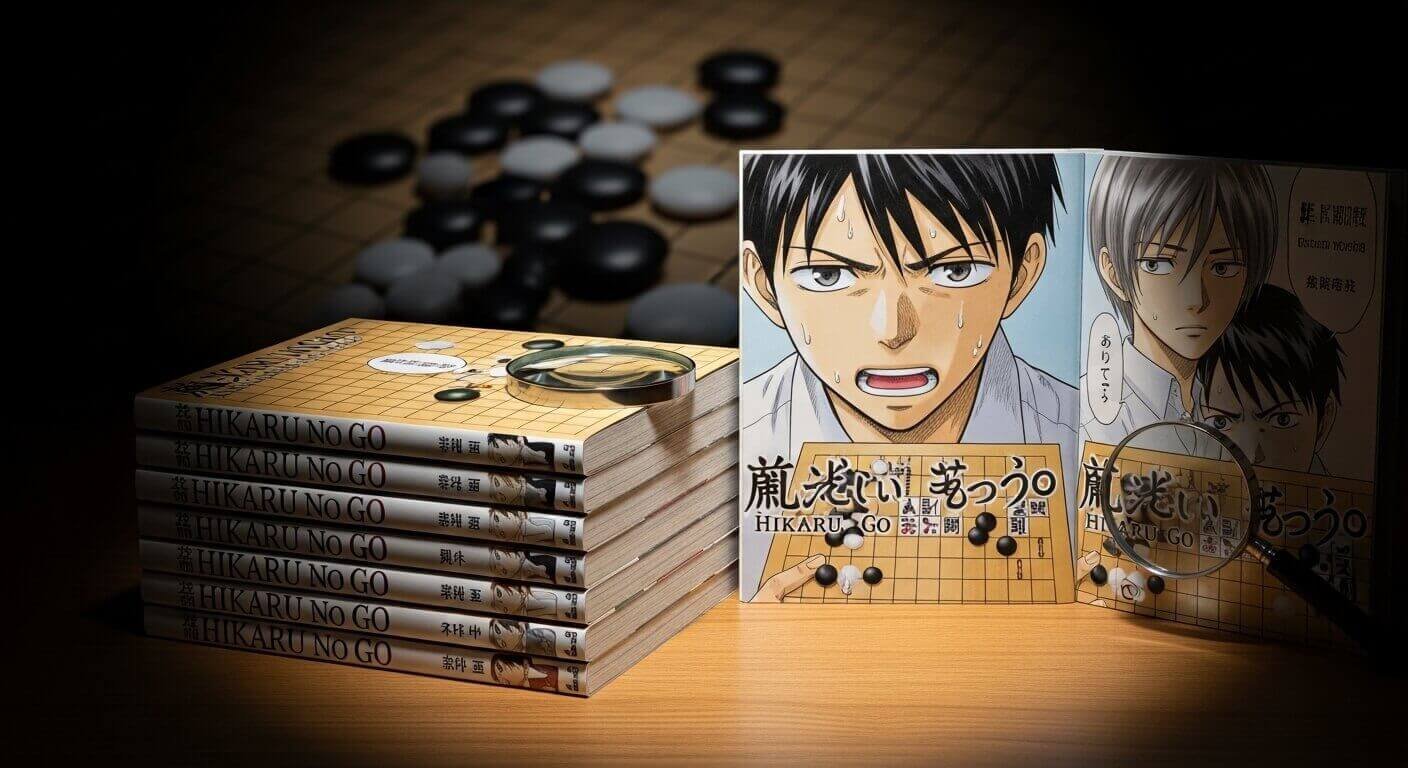
The Hikaru no Go manga is difficult to replace because it combines three rare elements simultaneously: a hyper-niche intellectual game portrayed with real authenticity, a ghost-mentor relationship that drives genuine emotional stakes, and a rival (Akira Touya) whose very existence forces the protagonist to grow. Most series achieve one or two of these — very few achieve all three.
Before jumping into recommendations, it matters to understand what specifically you are chasing. Readers who say “I want something like Hikaru no Go” are rarely asking for another Go manga. What they are asking for is a specific cocktail:
- A protagonist who starts with zero skill and earns every inch of progress
- A rival relationship that feels personal, not just competitive
- A craft or game that is treated with genuine respect and depth
- Emotional stakes that are intellectual, not physical
- A mentor figure — human, ghost, or otherwise — who changes the protagonist’s life
The series sold over 25 million copies and dramatically increased the popularity of Go in Japan and elsewhere, particularly among young children, with Go clubs being formed specifically because of the manga’s influence. That cultural footprint happened because the story respected its subject matter enough to make readers care about something they never expected to care about.
Every manga below earns its place on this list by meeting that standard in its own domain. <1. Chihayafuru — The Closest Match That Exists
Chihayafuru follows Chihaya Ayase, a girl who discovers the card game karuta in middle school and dedicates her life to mastering it. It mirrors the Hikaru no Go manga almost beat-for-beat: niche game treated with encyclopedic depth, a formative rival, a mentor who sees the protagonist’s potential before they do, and a coming-of-age arc tied directly to competitive growth. It is, by any reasonable measure, the most spiritually similar series available.
Why fans of the Hikaru no Go manga love it: Karuta — the competitive card game based on classical Japanese poetry — is about as niche as Go. And yet author Yuki Suetsugu makes every match feel like a chess match played at the speed of lightning. The reader learns the game alongside Chihaya, exactly as Hikaru’s readers learned Go alongside him.
The rival dynamic is equally strong. Arata Wataya fills the Akira Touya role with precision: a prodigy who operates at a level the protagonist cannot yet reach, who simultaneously inspires and torments them. The longing Chihaya feels toward Arata mirrors the obsessive pull Hikaru feels toward Touya throughout the series.
One element Chihayafuru does better: The female lead is handled with far more depth and agency than the Hikaru no Go manga managed. A documented criticism of the Hikaru no Go manga is that female characters, including Akari, were given very little agency, with the International Go Federation’s own survey showing that in 41 of 50 countries, fewer than 20% of Go players are female. Chihayafuru addresses this gap head-on.
Who should read it: Anyone who loved the slow build of Hikaru’s competence arc. The payoff for patience in Chihayafuru is enormous.
Volumes: 50 | Status: Complete | Where to Read: Manga Plus, Viz Media
2. Bakuman — Same Creative DNA, Built-in Authenticity
Bakuman, written by Tsugumi Ohba and illustrated by Takeshi Obata — the same Takeshi Obata who drew the Hikaru no Go manga — follows two middle school boys racing to create a hit manga and get it published in Weekly Shonen Jump. The shared artist means the visual language is identical. The shared theme of obsessive craft mastery, industry rivals, and dreams pursued across years makes it an essential read for any Hikaru no Go fan.
Why fans of the Hikaru no Go manga love it: Both series feature middle school boys deciding to chase dreams in non-mainstream fields — manga creation in Bakuman and Go in Hikaru no Go — and both give the reader an insider’s view of how those worlds actually function, which is rare in any genre.
There is something deeply satisfying about reading Bakuman, knowing Obata’s pen is on every page. The panel composition, the way tension is conveyed through a character’s eyes mid-competition, the careful pacing of a protagonist climbing a hierarchy — it all feels like home for Hikaru no Go readers.
The unique angle Bakuman offers: Because the series is literally about making manga, it functions as a meta-commentary on everything you love about shonen storytelling. Every rivalry, every editor’s critique, every failed chapter is also a meditation on why you are still reading at 2 AM.
Who should read it: Fans who loved the industry-building arc of Hikaru no Go — watching Hikaru navigate insei examinations, pro rankings, and the professional Go world. Bakuman replicates that structure almost perfectly in a different creative industry.
Volumes: 20 | Status: Complete | Where to Read: Viz Media, Manga Plus
3. 3-Gatsu no Lion — When the Game Becomes Survival
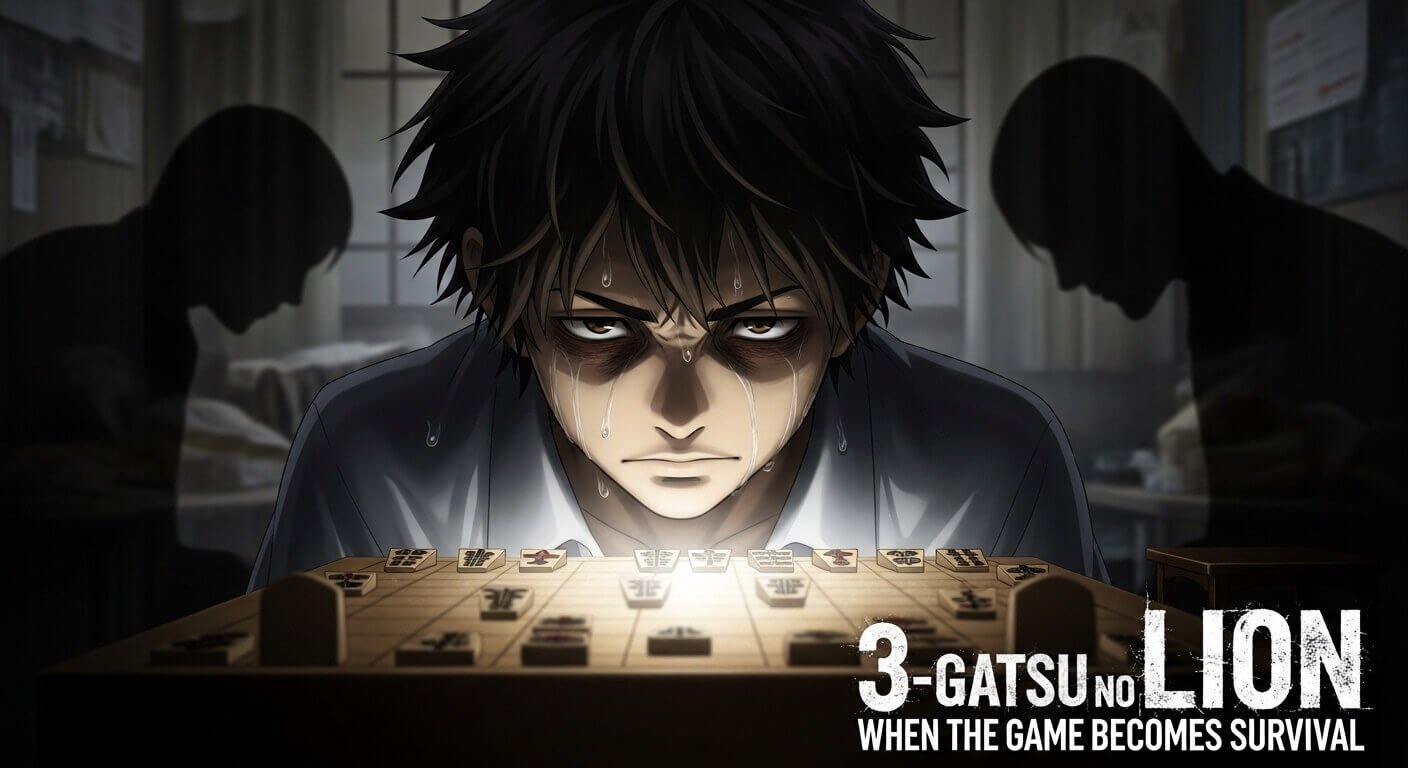
3-Gatsu no Lion (March Comes in Like a Lion) follows Rei Kiriyama, a teenage professional shogi player who is technically brilliant but emotionally isolated, navigating depression, family trauma, and the brutal hierarchy of competitive shogi. It shares the Hikaru no Go manga’s use of a board game as an emotional lens — but where Hikaru no Go tends toward inspiration, 3-Gatsu no Lion tends toward catharsis. It is the recommendation for readers who want more psychological depth.
Why fans of the Hikaru no Go manga love it: Both series use a traditional Japanese strategy game — Go in one case, shogi in the other — as the scaffolding for a story that is really about identity and belonging. The anime and manga for 3-Gatsu no Lion are praised for their poetic tone, their focus on friendship over romance, and their deeply felt portrayal of a young person trying to understand their passion for the game. Anime-Planet
Rei Kiriyama is, in many ways, a mirror image of Hikaru. Where Hikaru was initially uninterested and had to be pulled toward greatness, Rei is already technically great but emotionally hollow — and must find his own reason to care. Both journeys are equally compelling.
The emotional difference: Readers who found Hikaru no Go’s emotional register to be relatively light will find 3-Gatsu no Lion far more demanding. The series deals directly with grief, depression, and the weight of living alone at sixteen. It is heavier — but the payoff is extraordinary.
Who should read it: Readers who want the strategic game backdrop combined with genuine psychological complexity. Also essential for anyone who has ever wondered what the mental cost of prodigy actually looks like. <
Volumes: 17+ (ongoing) | Status: Ongoing | Where to Read: Young Animal, Viz Media
4. Shion no Ou — Shogi, Trauma, and Dark Rivalry
Shion no Ou follows a mute girl named Shion who witnessed her parents’ murders as a child and was adopted by a shogi-playing family. She pursues professional shogi as an adult while the killer lurks somewhere in the competitive shogi world. It functions as a tighter, darker version of the Hikaru no Go manga — same game-as-life-purpose structure, same rival dynamics, with a genuine murder mystery threading through the competition arcs.
Why fans of the Hikaru no Go manga love it: Shion no Ou has been described as a shorter, more condensed version of Hikaru no Go — with an added sinister plot running beneath the competitive surface, and camera work and tonal construction that closely mirrors the visual style of the Hikaru no Go anime and manga. Anime-Planet
The rivalry dynamic in this series is particularly strong. Like Akira Touya, Shion’s strongest opponents each carry histories that make them feel like fully realized people rather than obstacles. The stakes of each match are therefore emotional as well as competitive.
What makes it stand out: Shion no Ou does something the Hikaru no Go manga never fully attempted — it makes the competitive game world feel genuinely dangerous. The mystery element is not a gimmick. It reframes every match as potentially meaningful to the central trauma, which is a narrative structure very few sports manga have tried.
Who should read it: Fans who finished Hikaru no Go and wanted more darkness on the edges. Also, an excellent choice for readers who appreciate well-constructed mysteries woven into competition arcs.
Volumes: 9 | Status: Complete | Where to Read: Available via import and select digital platforms
5. Akagi — The Cut-Throat, High-Stakes Version
Akagi follows a genius teenager named Shigeru Akagi who walks into a yakuza mahjong game with no prior knowledge of the game and dismantles every opponent through sheer psychological warfare. It is the recommendation for readers who loved the prodigy-versus-establishment tension in the Hikaru no Go manga but want it pushed to extreme, life-or-death stakes.
Why fans of the Hikaru no Go manga love it: The core appeal of Hikaru no Go is watching someone operate at a level others cannot understand. Akagi features a protagonist who reveals that gambling — and by extension, the mental domination of opponents — is simply second nature to him, creating the same sensation of witnessing genius that makes Sai’s games so compelling in Hikaru no Go. Honeysanime
The key difference is tone. Hikaru no Go is ultimately hopeful and warm. Akagi is cold, clinical, and operates in moral grey zones. Both series make the reader feel the internal logic of a game through masterful pacing — but the emotional register could not be more different.
One honest caveat: Akagi is mahjong, which has a steeper learning curve for Western readers than Go. The manga does not spend much time explaining rules — it assumes you are following the emotional logic, not the technical one. This is actually a feature for some readers and a barrier for others.
Who should read it: Fans who loved the parts of Hikaru no Go where Sai played anonymously online and destroyed professional players who could not comprehend what they were facing. That specific dynamic is what Akagi is built entirely around.
Volumes: 36 | Status: Complete | Where to Read: Select digital platforms
6. Ping Pong the Manga — The Fastest Character Growth in the Genre
Ping Pong, by Taiyou Matsumoto, follows two childhood f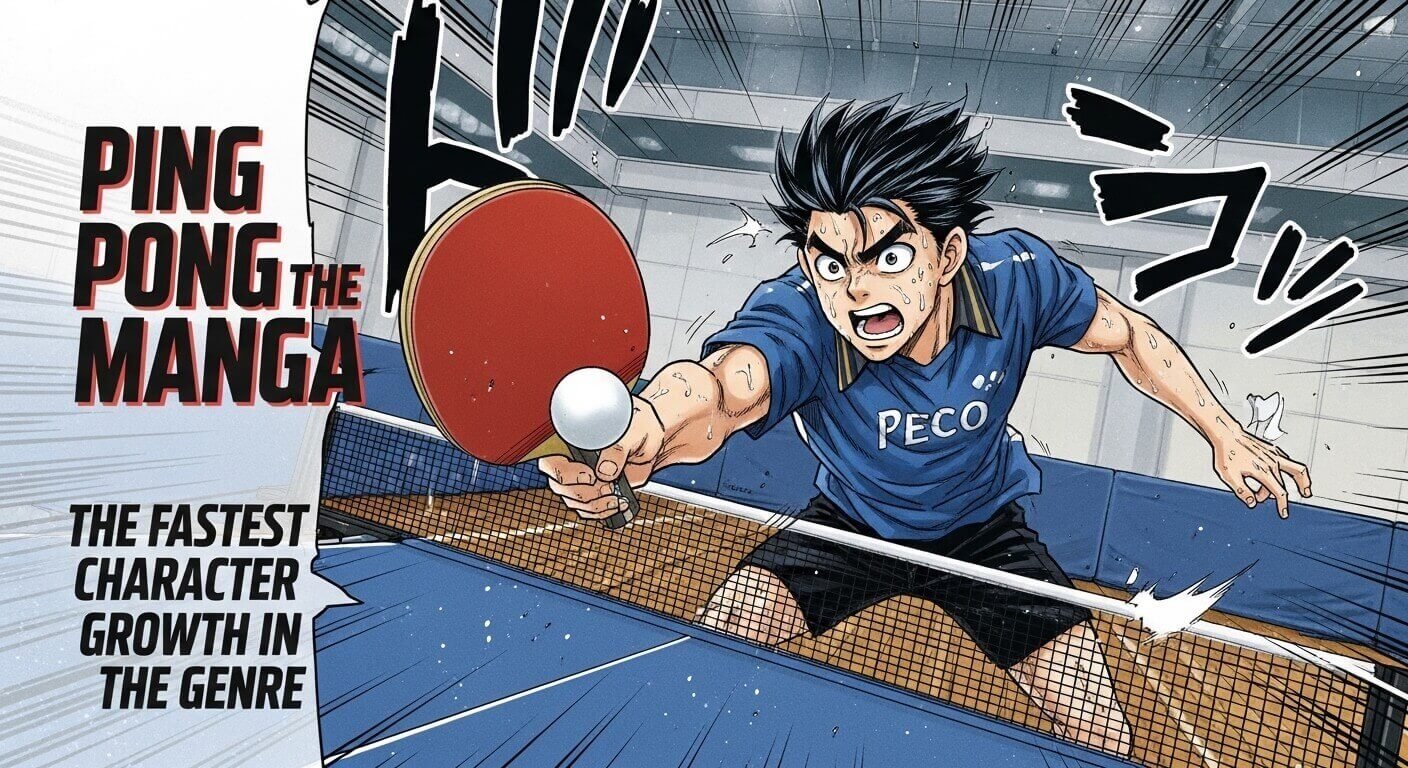 riends — the gifted Peco and the technically superior Smile — as they navigate the world of competitive table tennis. In just five volumes, it accomplishes what most shonen sports manga take twenty volumes to achieve. The character arcs are compressed to the point of poetic precision. For fans of the Hikaru no Go manga who want the emotional journey without the long-form commitment, Ping Pong is the answer.
Why fans of the Hikaru no Go manga love it: Both series are fundamentally about the relationship between talent and desire. Hikaru starts with no skill but gains desire. Smile starts with extraordinary skill but lacks desire. Both arcs arrive at the same question from opposite directions: what does the game mean to you, and is it enough?
The visual style is radically different from Takeshi Obata’s clean linework — Matsumoto draws with expressionist energy, rough and kinetic. But the emotional architecture underneath is strikingly similar.
The single most important thing this series does: It refuses to make winning the point. Several characters in Ping Pong discover their ceiling, accept it, and move on to find meaning elsewhere. That emotional honesty is rare in the shonen genre. The Hikaru no Go manga gestures toward this with Sai’s arc — Ping Pong delivers it fully.
Who should read it: Any reader who found the final chapters of Hikaru no Go emotionally devastating and wants another series willing to take those kinds of narrative risks.
Volumes: 5 | Status: Complete | Where to Read: Viz Media
7. Blue Period — When Passion Replaces the Board Game
Blue Period follows Yatora Yaguchi, a high-achieving but emotionally empty high schooler who discovers oil painting and decides to chase Tokyo University of the Arts — Japan’s most competitive art school — with no prior art background. It is the recommendation for readers who connected most with Hikaru no Go’s theme of finding your calling late and pursuing it with terrifying intensity, regardless of the specific craft involved.
Why fans of the Hikaru no Go manga love it: Blue Period replicates the structure of the Hikaru no Go manga almost precisely: the protagonist discovers a niche, realizes they are behind everyone who started earlier, receives informal mentorship, faces a rival who forces them to grow, and climbs an institutional hierarchy through a combination of talent and obsessive work ethic.
The specific emotional beat it nails is one Hikaru no Go fans will recognize immediately: the moment when a protagonist realizes they are seen by someone exceptional — when the genius rival looks at them and decides they are worth competing against. In Hikaru no Go, that moment is Touya’s reaction to Hikaru’s first game. In Blue Period, it is replicated through the lens of art criticism rather than Go.
What makes it unique on this list: Blue Period is the only recommendation here that is not about a traditional game. The craft is fine art — specifically oil painting and the competitive university entrance exam process. For readers who want the feeling of Hikaru no Go rather than the game-competition scaffolding, this is the strongest choice.
Who should read it: Readers who connected more with Hikaru’s identity journey than with the Go itself. Also excellent for anyone interested in the specific anxiety of entering a competitive creative field as a late beginner.
Volumes: 14+ (ongoing) | Status: Ongoing | Where to Read: Kodansha, Manga Plus
How to Choose the Right Starting Point
Not every reader wants the same thing. Here is a direct map based on what you loved most about the Hikaru no Go manga:
- Loved the ghost-mentor dynamic: Start with Chihayafuru — Arata functions as a spiritual heir to Sai’s role
- Loved the professional ladder / insei arc: Bakuman replicates this structure beat-for-beat in the manga industry
- Loved the psychological depth: 3-Gatsu no Lion goes further than Hikaru no Go ever attempted
- Loved the cold genius of Sai’s anonymous games: Akagi is built entirely around that sensation
- Wanted a faster, more concentrated emotional hit: Ping Pong delivers in five volumes what others take thirty to build
- Connected more with identity than game mechanics: Blue Period is your answer
Conclusion
The Hikaru no Go manga remains one of the most culturally significant series in Weekly Shonen Jump’s history. Its 23 volumes sold over 25 million copies, and the series won both the Shogakukan Manga Award and the Tezuka Osamu Cultural Prize — validated not just by fan love but by the institutions of Japanese culture itself. CBR Finding a direct replacement for that experience is impossible, but finding the individual elements that made it great — and chasing those elements in different series — is entirely achievable.
The seven manga above represent the strongest available options, each selected for a specific emotional reason rather than a surface-level genre tag. Start with Chihayafuru if you want the closest structural match. Start with 3-Gatsu no Lion if you want to feel more. Start with Ping Pong if you want to be genuinely surprised.
The Hikaru no Go manga taught a generation that any pursuit — even a 2,500-year-old board game played in silence — can be the vehicle for the most important journey of your life. These series carry that lesson forward in their own ways.
FAQ: Manga Like Hikaru no Go
Is there a manga that continues the Hikaru no Go story?
There is no official continuation of the Hikaru no Go manga. The series ended in 2003 with Volume 23. A stage play adaptation was announced in 2024, but no new manga sequel exists. Fans seeking continuation most commonly turn to Chihayafuru or Bakuman for the same creative team’s DNA and emotional storytelling style.
What makes Hikaru no Go different from other sports manga?
The Hikaru no Go manga is unique because its “sport” — the board game Go — is entirely mental, has no physical component, and draws from over 2,500 years of strategic history. This makes the tension intellectual rather than athletic. Very few sports manga commit to that level of cognitive drama. Chihayafuru and 3-Gatsu no Lion are the closest equivalents in terms of mental-game focus.
Can I enjoy these manga without knowing how to play Go or shogi?
Yes — and the Hikaru no Go manga itself is the best proof of this. The series educated readers about Go strategies and culture through Hikaru’s journey without requiring prior knowledge, with the educational aspect helping demystify Go and make it approachable to complete newcomers. Every manga on this list follows the same principle: knowledge of the game enhances the experience but is never required for emotional engagement.
Is the Hikaru no Go anime or manga better?
Both versions are strong, with meaningful differences. The manga includes a full final arc — the Hokuto Cup international tournament — that the anime adaptation did not complete. Readers who want the complete story should read the manga. The anime, however, benefits from music and voice acting that heightens the emotional impact of key matches. For first-time fans, starting with the manga and using the anime for its first 60 episodes is the most common recommendation.
What age group is the Hikaru no Go manga best suited for?
The Hikaru no Go manga was serialized in Weekly Shonen Jump and is formally targeted at boys aged 12–18. In practice, its readership skews older — adult readers frequently cite it as one of the most emotionally resonant manga they have ever read, regardless of age. The series contains no mature content. Every recommendation in this article shares a similar accessibility profile, with 3-Gatsu no Lion being the most emotionally intense and therefore best suited to readers 16 and older.
Are any of these manga available on official English platforms?
Yes. Chihayafuru, Bakuman, and Ping Pong are available through Viz Media in print. Blue Period is available through Kodansha and Manga Plus. 3-Gatsu no Lion is available through Viz Media. Shion no Ou and Akagi have more limited official English availability and may require import editions. Always check Manga Plus for free legal digital access before purchasing.
Why did Hikaru no Go end so abruptly?
The Hikaru no Go manga ended in 2003 following the departure of its ghost mentor character Sai, which creator Yumi Hotta has described as a natural conclusion to the story’s central arc. The series did not end due to poor sales — it was among Jump’s most popular titles. The ending remains controversial among fans who felt the Hokuto Cup arc deserved more resolution, which is partly why the anime’s incomplete adaptation frustrates readers.